

TL;DR:
- Virtual fencing offers over 99.5% cattle containment in Canadian trials, even in winter conditions.
- It enables flexible, cost-effective rotational grazing, especially on remote BC Crown land.
- Proper management, hybrid fencing, and connectivity planning are key to successful adoption.
Most ranchers assume only physical fences can reliably contain cattle. That assumption is being overturned by real-world data. Over 99.5% containment has been recorded in Canadian trials using GPS-enabled virtual fencing technology. For BC ranchers managing large Crown land leases, rugged terrain, and tight labor budgets, that number matters. This guide breaks down exactly how virtual fencing works, where it delivers the most value on BC ranches, where it falls short, and how to integrate it into a practical herd management strategy that actually sticks.
Table of Contents
- What is virtual fencing for BC ranches?
- How virtual fencing improves ranch management and grazing in BC
- Limitations, edge cases, and system requirements
- Animal welfare and safety: Are BC herds protected?
- Perspective: What most BC ranchers miss about virtual fencing
- Take the next step with innovative fencing solutions
- Frequently asked questions
Key Takeaways
| Point | Details |
|---|---|
| Over 99% containment | Virtual fencing consistently keeps herds safe and contained, matching traditional fencing results. |
| Boosts grazing efficiency | Real-time herd movement enables better rotational grazing and improved pasture use. |
| Best for internal boundaries | Use virtual fencing to divide pastures, but keep strong perimeter fences for security. |
| Supports animal welfare | Technology uses gentle signals and research shows no significant harm to cattle. |
| Initial costs offset by funding | Grants and lower labor costs make virtual fencing more accessible for BC ranches. |
What is virtual fencing for BC ranches?
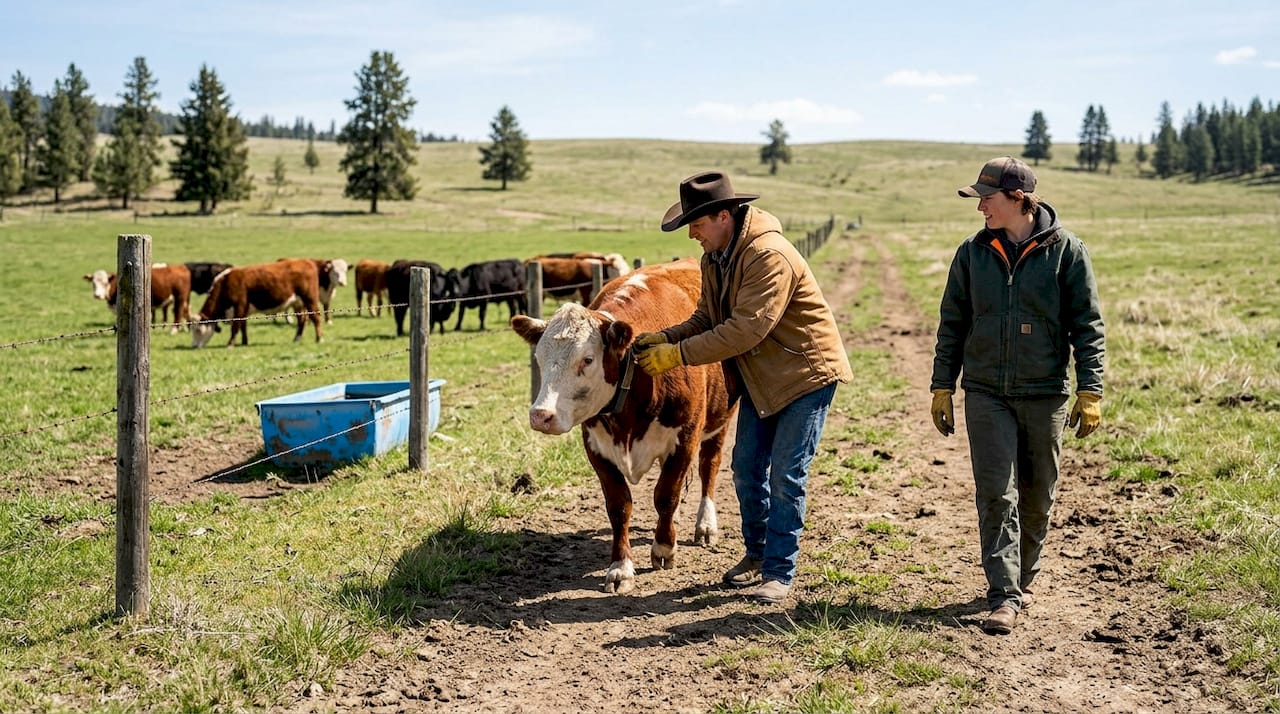
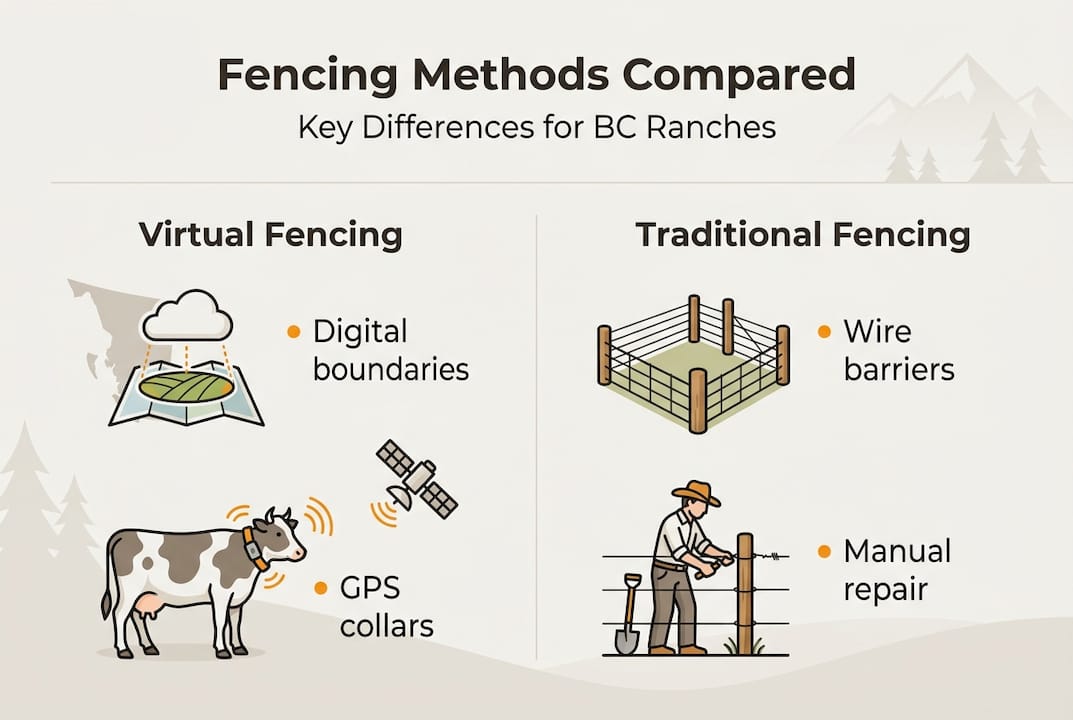
Virtual fencing replaces physical wire and posts with GPS-enabled collars worn by individual animals. You draw digital boundary lines on a smartphone app or desktop platform, and the system enforces those boundaries automatically. There is no wire to stretch, no posts to drive, and no gates to open. For a thorough breakdown of how the technology works in practice, the virtual fencing explained resource at FenceFast is a solid starting point.
Here is how the system works in sequence:
- The GPS collar tracks each animal’s real-time position against your digital boundary.
- When an animal approaches the boundary, the collar emits an audio warning tone.
- If the animal continues forward, a mild electric pulse is delivered. This pulse is roughly one-fifth the strength of a traditional electric fence.
- After the initial learning phase, most cattle respond to the audio cue alone and rarely require the pulse.
- Herd learning typically takes 5 to 7 days, after which animals navigate boundaries confidently.
A common concern in BC is winter performance. Cold temperatures, snow cover, and shortened daylight hours raise legitimate questions about battery reliability. Research shows that battery stays above 96% effective capacity even in winter conditions, with containment rates holding above 99.5% year-round. That is not a lab result. That is Canadian field data.
“Virtual fencing delivers containment rates that rival or exceed traditional electric fencing, even under Canadian winter conditions, with cattle adapting within days rather than weeks.”
For ranchers who have heard skeptical claims about the technology, a closer look at virtual fencing myths shows how much of the early resistance was based on outdated assumptions. Independent virtual fencing research continues to validate performance across diverse grazing environments.
Pro Tip: Start your herd’s learning phase in a smaller, familiar paddock before deploying virtual boundaries across large Crown land blocks. This shortens adaptation time and builds animal confidence with the system.
How virtual fencing improves ranch management and grazing in BC
BC ranchers deal with challenges that most fencing guides ignore: remote Crown land leases, riparian protection requirements, steep terrain, and limited seasonal labor. Virtual fencing addresses all of these in ways that physical fencing simply cannot match at scale.
Here are the core management improvements you can expect:
- Rotational grazing on demand. You can move herds to fresh pasture by redrawing a digital boundary from your phone. No crew, no wire, no wasted travel time. The pasture health benefits of frequent rotation are well documented, and virtual fencing makes that rotation practical even across large acreages.
- Labor cost reduction. Installing and maintaining physical interior fencing is one of the biggest ongoing costs on a BC ranch. Virtual fencing eliminates most of that for internal paddock divisions.
- Riparian zone protection. You can draw exclusion zones around creeks, wetlands, and sensitive areas in minutes. This supports BC’s environmental compliance requirements and reduces the risk of regulatory issues on Crown land.
- Crown land flexibility. Many BC ranchers lease Crown land where permanent fencing is restricted or impractical. Virtual boundaries work on any terrain without infrastructure.
- Precision stocking. Adjust paddock size based on available forage, stocking density, and stubble height in real time.
Virtual fencing enhances rotational grazing while lowering costs and protecting riparian zones, which is particularly relevant for BC’s Crown land grazing context.
| Management task | Traditional fencing | Virtual fencing |
|---|---|---|
| Moving herd to new paddock | Hours of physical labor | Minutes via app |
| Protecting riparian zones | Permanent fence installation | Digital exclusion zone |
| Adjusting paddock size | Reinstall wire and posts | Redraw boundary on app |
| Crown land interior division | Often restricted or costly | No infrastructure needed |
| Winter maintenance | Wire checks, post repairs | Remote monitoring only |
For ranchers ready to set up a rotational system, the rotational fencing setup guide covers the practical steps, and rotational fencing solutions outlines what Canadian farmers are using right now.
Pro Tip: Use virtual fencing to create smaller paddocks during dry summer months when forage is stressed. Tighter rotations during drought conditions can extend your grazing season significantly without overgrazing any single area.
Limitations, edge cases, and system requirements
While the benefits sound compelling, it’s crucial to recognize where virtual fencing might not be the silver bullet. Understanding the real constraints helps you plan a system that actually works rather than one that fails at the worst possible moment.
Connectivity is the biggest variable. Virtual fencing systems require either cellular coverage or a LoRa base station (a low-power, long-range radio network) to function. In remote BC valleys and heavily forested terrain, cellular dead zones are common. Installing a LoRa base station solves this in most cases, but it adds upfront cost and setup complexity. Edge cases include poor cellular coverage and the need for supplementary base stations in areas with limited signal.
Key limitations to plan around:
- Collar durability: Long-term collar performance over five or more years has not yet been fully tested in Canadian conditions. This is an honest gap in the current data.
- Perimeter fencing: Virtual fencing is not a replacement for strong exterior barriers. Property perimeters, highway boundaries, and neighbor fences should remain physical.
- Regulatory compliance: BC and federal regulations may require physical fencing in certain situations. Always review fencing laws for livestock before removing existing perimeter infrastructure.
- Battery performance: While winter performance is strong, expect slightly lower efficiency compared to summer. Regular app-based monitoring keeps you ahead of any issues.
- Initial investment: Hardware costs are real. Factor in collar units, base stations if needed, and subscription fees when calculating your return on investment.
| Factor | Virtual fencing | Traditional electric fencing |
|---|---|---|
| Remote area coverage | Needs cellular or LoRa | Works anywhere |
| Perimeter security | Not recommended | Ideal |
| Interior flexibility | Excellent | Labor intensive |
| Winter reliability | Battery above 96% | Requires physical checks |
| Upfront cost | Higher | Lower |
| Long-term labor cost | Much lower | Ongoing |
For guidance on choosing durable fencing solutions that complement virtual systems, and for ranchers who need flexible options, portable fence systems can bridge gaps in areas where virtual coverage is inconsistent. Independent limitations analysis continues to refine best practices for hybrid deployments.
Animal welfare and safety: Are BC herds protected?
A key concern remains: Will new virtual fencing technology truly protect herd health and safety? Here’s what the evidence shows.
The short answer is yes, when the system is used correctly. The collar’s design prioritizes animal welfare at every stage. The audio cue comes first, giving the animal a clear chance to respond before any physical sensation occurs. The pulse itself is much gentler than traditional fencing, and research finds no significant animal welfare issues in cattle managed with virtual fencing systems.
“Canadian trials report no measurable increase in stress indicators, and cattle behavior patterns remain normal after the initial learning phase. The system is designed to guide, not punish.”
Key welfare facts for BC ranchers:
- Audio warnings are issued before any pulse, giving animals a consistent, learnable signal.
- After the 5 to 7 day learning phase, most cattle respond to audio alone. Pulses become rare.
- Stress hormone levels and behavioral indicators in Canadian trials showed no negative impact compared to control herds.
- The system works across varying stocking densities and stubble heights without welfare compromises.
- Collars are designed to be comfortable for long-term wear, though regular checks are still recommended.
That said, technology does not replace attentive management. You still need to monitor herd behavior, check collar fit, and respond to alerts from the app. Virtual fencing is a tool that amplifies your management capacity. It does not replace your judgment. For foundational knowledge on keeping livestock safe, animal fencing basics covers essential practices that apply regardless of which fencing method you use. Additional cattle welfare research continues to support the safety profile of well-managed virtual fencing systems.
Perspective: What most BC ranchers miss about virtual fencing
Having broken down technology, benefits, and risks, let’s consider what truly separates successful virtual fencing adopters from those who struggle. The answer is rarely about the technology itself.
The ranchers who get the most out of virtual fencing are the ones who treat it as a management upgrade, not a set-it-and-forget-it solution. The biggest mistakes we see come from over-relying on the system without adapting daily workflows. Staff who do not understand how the collars work, or who do not trust the app data, will default to old habits and undermine the system’s value.
The most effective approach is hybrid. Use strong physical fencing for your perimeter and any legally required boundaries. Use virtual fencing for all internal pasture divisions where flexibility and speed matter most. This combination gives you the security of traditional fencing where it counts and the labor savings of digital management where it delivers the most value.
Regular monitoring, solid connectivity planning, and genuine staff buy-in are what actually drive results. The ranchers who invest time in those three areas consistently report better outcomes than those who focus only on the hardware. Building herd control with virtual fencing into a broader adaptive management strategy is what moves the needle on both labor costs and pasture health.
Take the next step with innovative fencing solutions
If you’re ready to act on the insights above, here’s where you can find trusted solutions and support. FenceFast has spent 26 years helping Canadian ranchers build fencing systems that work in real conditions, including BC’s most demanding terrain and climate.

At FenceFast, you’ll find Gallagher eShepherd virtual fencing technology, traditional electric fencing components, and expert guidance on building a hybrid system that fits your operation. Whether you need help planning connectivity for a remote Crown land block or sourcing the right accessories, the team can walk you through it. You can also explore options like an electric fence accessory kit to complement your virtual setup with reliable backup infrastructure. Funding support through OFCAF and BMP grants may also help offset your initial investment.
Frequently asked questions
How reliable is virtual fencing on BC ranches?
Canadian field trials show over 99.5% containment with cattle adapting quickly and battery performance holding above 96% even through winter conditions.
Does virtual fencing hurt livestock?
No. The electric pulse is much gentler than traditional fencing and is only delivered after an ignored audio warning. Research finds no significant animal welfare issues in properly managed herds.
Are there grants or funding for virtual fencing in BC?
Yes. Funding for virtual fencing in BC is available through programs like OFCAF and BMP grants, which can significantly reduce the upfront hardware and setup costs.
Can virtual fencing replace all physical fencing on my property?
No. Virtual fencing complements perimeter fences rather than replacing them. It excels at managing internal pasture divisions, but strong physical barriers remain essential for property boundaries and regulatory compliance.
Recommended
- What is virtual fencing for cattle? Herd control explained – FenceFast Ltd.
- Portable fencing advantages for Canadian farms: boost efficiency – FenceFast Ltd.
- Fencing for Rotational Grazing: Proven Solutions for Canadian Farmers – FenceFast Ltd.
- 3 Virtual Fencing Myths Every Farmer Should Know – FenceFast Ltd.

