

TL;DR:
- Fencing codes in Canada vary by province, municipality, livestock type, and materials.
- Proper documentation and adherence to regional standards are essential to avoid liability and fines.
- Regular inspections, updated knowledge, and neighbor agreements help ensure ongoing fencing compliance.
Many Canadian farmers have faced surprise fines or livestock escapes simply because they assumed their fence was good enough. Fencing codes in Canada are not one-size-fits-all rules. They vary by province, municipality, livestock type, and even the materials you use. Whether you run a cattle operation in Alberta or manage a mixed farm in Ontario, knowing the exact legal requirements for your fence can save you thousands of dollars and keep your animals where they belong. This guide breaks down the essentials of Canadian fencing codes so you can build, maintain, and document your fences with confidence.
Table of Contents
- The basics of fencing codes in Canada
- Key regulations across provinces and municipalities
- Approved materials and construction standards
- Practical guidance to ensure compliance and livestock safety
- Adapting your fencing: Future-proofing and special considerations
- Our take: What most get wrong about fencing compliance in Canada
- Get fencing solutions and expert guidance with FenceFast
- Frequently asked questions
Key Takeaways
| Point | Details |
|---|---|
| Know your code sources | Fencing regulations are set at federal, provincial, and municipal levels, so always check all three. |
| Match your fence to your livestock | Choosing the right height, materials, and construction is crucial for both compliance and animal safety. |
| Document everything | Keep records of installations and neighbor agreements to avoid disputes and prove compliance. |
| Stay ahead of changes | Review fencing codes regularly to adapt to evolving regulations and technologies. |
The basics of fencing codes in Canada
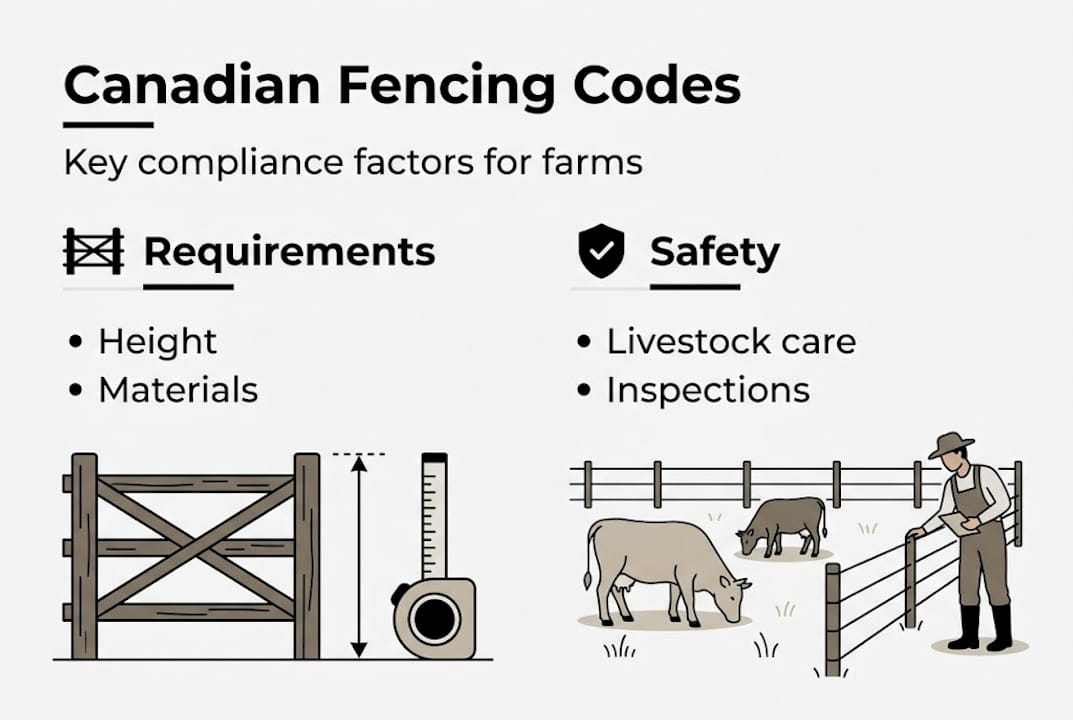
Fencing codes are legally enforceable standards that govern how agricultural fences must be built, maintained, and documented. They cover everything from minimum post height and wire gauge to the materials you can use and how close a fence can be to a property line. These are not suggestions. They are binding rules that affect your liability if livestock escapes and causes damage or injury.
In Canada, fencing authority is split across three levels of government:
- Federal law sets baseline animal health and transport standards through agencies like the Canadian Food Inspection Agency.
- Provincial acts (such as Ontario’s Line Fences Act or Alberta’s Stray Animals Act) define specific obligations for livestock containment and neighbor cost-sharing.
- Municipal bylaws can add stricter requirements on top of provincial rules, especially in areas near urban zones or environmentally sensitive land.
As outlined in fencing laws for livestock owners, fencing must contain livestock and prevent escapes as specified by Canadian law. That legal obligation sits with the landowner, not the contractor who built the fence.
“Non-compliance is not just a fine risk. It’s a liability risk. If your cattle get onto a highway and cause an accident, the legal and financial consequences can be devastating.”
Penalties for non-compliance vary by province but commonly include fines, mandatory fence removal or reconstruction, and civil liability for damages caused by escaped animals. Proper livestock fencing compliance also requires documentation. Keep records of your fence installation dates, materials used, any permits obtained, and written agreements with neighboring landowners. These records are your first line of defense if a dispute arises. The regulations for livestock fencing from the federal government reinforce why this paperwork matters.
Key regulations across provinces and municipalities
Once you know who sets the rules, it’s vital to understand how those rules vary depending on where you farm and what animals you manage. A fence that’s perfectly legal in Saskatchewan may fall short of Alberta’s requirements for the same livestock. This is where many producers get caught off guard.
Requirements for fencing design vary by region and livestock type, which means you cannot simply copy a neighbor’s setup and assume you’re covered. Here’s a simplified comparison of minimum requirements across three major provinces:
| Province | Minimum height | Approved materials | Setback rules |
|---|---|---|---|
| Ontario | 4 ft (cattle) | Woven wire, barbed wire, wood | Varies by municipality |
| Alberta | 4 ft (cattle), 5 ft (horses) | Barbed wire, electric, woven wire | Property line or negotiated |
| Saskatchewan | 4 ft general livestock | Barbed wire, woven wire | Provincial standard applies |
The Ontario Line Fences Act is one of the more detailed provincial frameworks. It specifies not only construction standards but also the formal process for resolving disputes between neighbors over fence location and cost. In Alberta, the rules lean more toward the livestock owner’s responsibility to contain animals, with clearer guidance on who pays when a shared fence needs repair.
Municipal bylaws can complicate things further. Urban fringe areas, for example, may require permits before you break ground on any new fence. Some municipalities restrict barbed wire near trails or public roads. Always check with your local county or rural municipality before starting a new installation.
Cost-sharing for joint fences is another common friction point. In most provinces, neighboring landowners split the cost of a boundary fence equally, but only if both parties keep livestock. If one neighbor has no animals, the cost obligation may shift entirely to the livestock owner. For cattle fencing ideas that work within these shared-cost frameworks, planning your layout with the property line in mind from day one saves a lot of headaches later.
Pro Tip: Before you start any fencing project, request a written confirmation from your municipal office about local bylaw requirements. A five-minute call can prevent a costly rebuild.
Approved materials and construction standards
With regional differences in mind, you’ll need to select materials and methods that meet your specific legal obligation while ensuring longevity. Not every material you can buy at a farm supply store is code-approved for every situation.
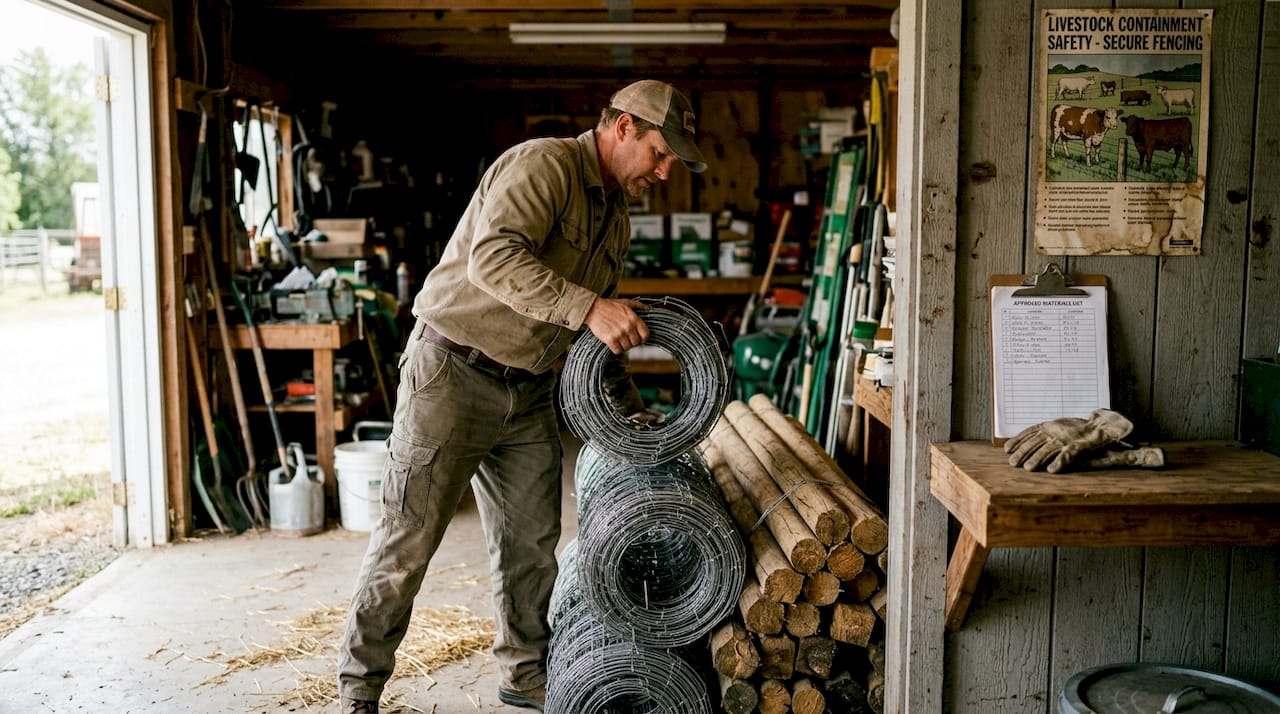
The most commonly approved materials across Canadian provinces include barbed wire, woven wire (also called field fence or page wire), electric fencing, and treated wood posts. Each comes with specific construction requirements. As noted in agricultural fencing in Canada, durable materials and proper construction are essential for compliance, not just longevity.
| Material | Pros | Cons | Typical code use |
|---|---|---|---|
| Barbed wire | Low cost, durable | Not safe for horses | Cattle, perimeter fencing |
| Woven wire | Versatile, secure | Higher upfront cost | Sheep, pigs, mixed farms |
| Electric fencing | Flexible, cost-effective | Needs power source | Rotational grazing, temporary |
| Treated wood | Strong, traditional | Expensive, labor-intensive | High-security perimeters |
For barbed wire fencing basics, most codes require a minimum of four strands for cattle containment, with post spacing no greater than 16 feet for line posts and 8 feet near corners and gates. Bracing is critical. A poorly braced corner post will cause the entire fence line to sag within a season.
Here are three key steps to building a compliant fence:
- Survey your boundary first. Confirm the exact property line with a registered survey before setting a single post. Building even six inches over the line can trigger a legal dispute.
- Select code-approved materials for your specific livestock. Cross-reference provincial requirements and your municipal bylaw before purchasing.
- Install proper corner and end bracing. Most codes specify minimum brace post diameter and depth. Follow these specs exactly, and document your installation with photos.
When you compare farm fencing materials, factor in not just purchase price but also maintenance costs and how each material holds up to your local climate and animal pressure.
Practical guidance to ensure compliance and livestock safety
Armed with knowledge about materials and standards, it’s time to focus on real-world steps for staying compliant and safeguarding your investment. Knowing the rules is one thing. Applying them consistently across a working farm is another.
Start with a property boundary survey if you haven’t done one recently. Fence lines shift over decades, and old posts don’t always match legal property lines. Next, pull up your provincial act and your municipal bylaw before purchasing any materials. Codes do get updated, and buying materials based on last year’s requirements can leave you short of compliance.
For proper installation steps that are both legal and functional, documentation is non-negotiable. Photograph every stage of your installation. Keep receipts for materials. Record the date work was completed and note any neighbor agreements in writing, signed by both parties.
Here are the most common compliance mistakes and how to avoid them:
- Skipping the permit check. Some municipalities require a permit even for basic agricultural fencing. A quick call costs nothing.
- Using non-approved materials. Just because a product is sold at a farm store doesn’t mean it meets your provincial code.
- Ignoring maintenance obligations. Most codes require fences to be kept in good repair. A sagging wire is not just a safety risk, it’s a legal one.
- Failing to document neighbor agreements. Verbal deals don’t hold up when disputes go to a fence viewer or court.
- Assuming nothing has changed. Check for bylaw updates every two to three years, especially if your operation has expanded.
For practical livestock fence tips that cover both compliance and animal behavior, build a maintenance schedule into your farm calendar. Walk your fence lines at least twice a year, ideally before spring turnout and after fall harvest. The Alberta fencing guidelines also emphasize periodic inspection as a core compliance requirement.
Pro Tip: Create a simple fence log for each pasture. Record inspection dates, repairs made, and materials used. This log becomes invaluable if you ever face a neighbor dispute or insurance claim.
Adapting your fencing: Future-proofing and special considerations
Once you’ve mastered today’s requirements, it’s wise to look ahead at tomorrow’s regulations and the tools that can keep you compliant and productive. Canadian fencing codes are not static. They evolve in response to livestock disease outbreaks, wildlife corridor pressures, and environmental policy shifts.
Innovative fencing solutions can enhance compliance and farm productivity at the same time. Portable fencing systems, for example, are increasingly recognized in provincial codes as acceptable for rotational grazing programs. Electric fencing technology has also improved dramatically, with solar-powered energizers now meeting the same safety and performance standards as grid-powered units.
Wildlife interactions are a growing concern in many regions. Provinces with significant deer, elk, or predator populations may have specific requirements for fence height and design near wildlife corridors. Fencing for wildlife management requires balancing livestock containment with wildlife passage, and some federal programs now incentivize wildlife-friendly fencing designs.
Here are key ways to stay ahead of code changes:
- Subscribe to your provincial agricultural ministry’s update list.
- Attend local agricultural extension events where bylaw changes are often announced.
- Join a producer association. These groups often lobby on fencing regulations and provide early notice of upcoming changes.
- Review your fence plan every time you expand your operation or add a new livestock species.
- Ask your municipal office for a written copy of current fencing bylaws every two to three years.
Our take: What most get wrong about fencing compliance in Canada
Here’s the uncomfortable truth most producers don’t want to hear: the biggest compliance failures we see aren’t from people who ignored the rules. They’re from people who followed the rules once and then stopped paying attention.
The “set and forget” mentality is the most expensive mistake in agricultural fencing. A fence that was compliant when you built it in 2018 may not meet 2026 standards if your municipality updated its bylaws or your province amended its livestock act. Most producers never check.
The second most common failure is missing neighbor agreements. A handshake deal is not a legal document. When a dispute goes to a fence viewer, the party with written records almost always wins. It takes ten minutes to draft a simple agreement and get a signature.
Investing time in education and collaboration with neighbors pays real dividends. We’ve seen operations save tens of thousands of dollars in liability costs simply because they kept clean records and stayed current with wildlife and livestock management fencing requirements. Compliance is not a one-time task. It’s an ongoing practice.
Get fencing solutions and expert guidance with FenceFast
Now that you know how to stay compliant and prepared, here’s where to get high-quality materials and guidance built for Canadian conditions.

FenceFast fencing solutions are designed with Canadian agricultural requirements in mind, from code-compliant wire and post systems to electric fencing kits that meet provincial safety standards. Whether you’re building a new perimeter fence for cattle or setting up a rotational grazing system, the product selection covers what you need. If you’re looking for a reliable starting point, the Patriot electric fence accessory kit is a solid option for producers who want a tested, ready-to-install solution. The team at FenceFast also offers design consulting to help you navigate region-specific compliance questions before you spend a dollar on materials.
Frequently asked questions
What is the minimum height for livestock fences in Canada?
Minimum fence height requirements vary by region and animal type, but typically range from 4 to 5 feet depending on your province and the livestock you’re containing. Always confirm with your specific provincial act and local bylaw.
Who is responsible for fence costs between neighbors?
In most provinces, neighboring landowners share fence costs equally when both keep livestock, but cost-sharing obligations are outlined in provincial statutes and can shift based on land use. Get any cost-sharing agreement in writing before construction begins.
Do electric fences meet Canadian code requirements?
Electric fencing is allowed under Canadian regulations when properly installed according to approved guidelines and safety codes. Requirements vary by province, so verify your energizer type and installation method against local standards.
How often do fencing codes change in Canada?
Regulations may change every few years or sooner if livestock management best practices shift or local bylaws are amended. Checking for updates every two to three years, or whenever you expand your operation, is a smart habit.

