

For most rotational grazing and short-term paddocks, portable electric polywire or polytape is the most cost-effective, flexible option on the market. A single conductive strand handles conditioned adult cattle. Horses do better with the higher visibility of polytape. Sheep and goats need 3 to 5 strands or electric netting, and netting also works best for predator protection around small stock.
Here’s the quick species breakdown before you buy anything:
- Cattle (conditioned adults): one strand, minimum 26 inches high
- Horses: polytape for visibility, typically two strands
- Sheep and goats: 3 to 5 strands or electric netting
- Swine and small/exotic animals: electric netting, lower first strand
Fencefast stocks the reels, energizers, and posts for each of these setups, and offers design consulting if your paddock layout is more complicated than a straight rectangle.
Key Takeaways
Portable electric polywire and polytape deliver flexible, cost-effective containment for rotational grazing, provided the strand count, voltage, and grounding match the livestock class and soil conditions.
| Point | Details |
|---|---|
| Match wire type to purpose | Use polywire for cost-effective long runs and polytape for high-visibility zones like laneways and horse paddocks. |
| Size strands to species | One strand works for conditioned cattle; sheep and goats need 3 to 5 strands or electric netting. |
| Ground for your soil | Small solar energizers need one ground rod; larger systems and dry soil need multiple, deeper rods. |
| Train before you rely on it | Condition animals in a small receiving paddock first; this single step prevents most breakout problems later. |
| Buy the full system from Fencefast | Fencefast supplies matched reels, wire, energizers, and grounding kits plus design consulting for complex layouts. |
Table of Contents
- How Do You Choose the Right Temporary Wire Fencing?
- How Do You Size an Energizer for Temporary Fencing?
- What Do You Need for a Quick Temporary Fence Setup?
- How Do You Train Livestock to Respect an Electric Fence?
- How Do You Troubleshoot and Maintain Temporary Wire Fencing?
- How Fencefast Supports Your Temporary Fencing Setup
- What Should You Budget for Temporary Wire Fencing?
- How Long Does Temporary Wire Fencing Actually Last?
- Where Should You Set Up Temporary Fencing to Minimize Impact?
- Do You Need a Permit for Temporary Wire Fencing?
- What Conventional Fencing Advice Gets Wrong
- Get Your Temporary Fencing System From Fencefast
- Sources
How Do You Choose the Right Temporary Wire Fencing?
The three main conductor types each solve a different problem, and picking the wrong one is the single most common reason a new grazing system underperforms.
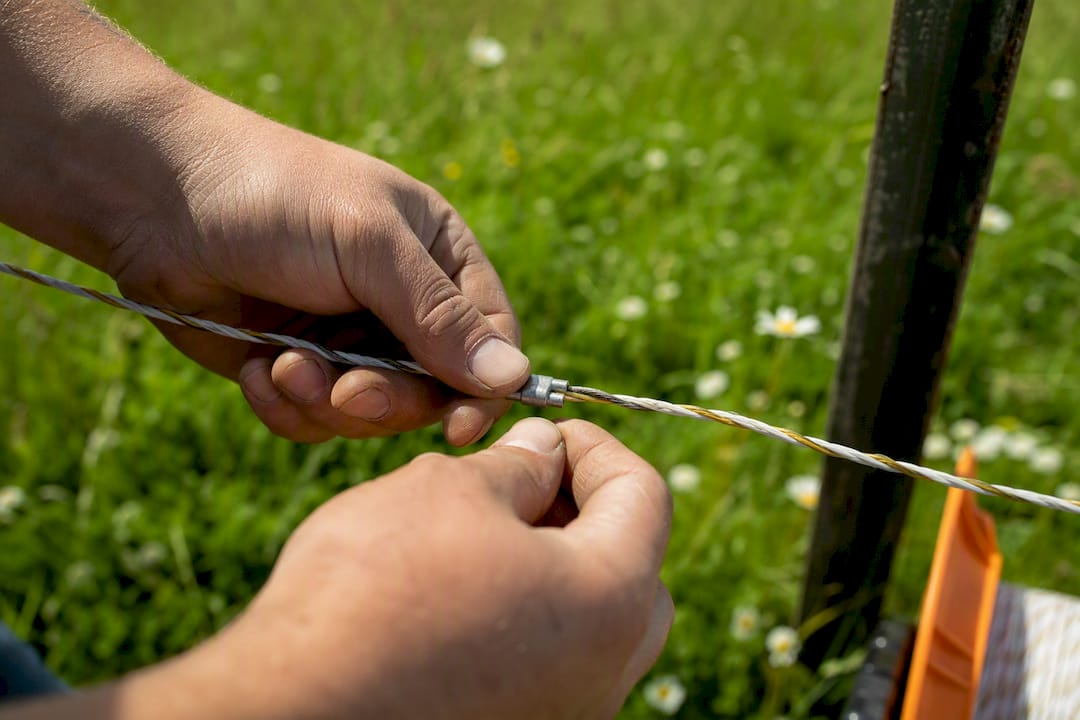
Polywire is a braided cord with fine metal filaments woven through it. It’s light, cheap, and coils fast onto a reel, which makes it the default choice for anyone subdividing a large pasture into multiple daily or weekly moves. Polytape uses the same filament principle but in a flat ribbon, typically half an inch to an inch and a half wide. It’s dramatically easier for animals and people to see, which matters most with horses or in laneways where visibility prevents accidents. That visibility comes at a price: polytape costs roughly twice as much per foot as polywire, so reserve it for spots where sight lines actually matter rather than running it across an entire quarter section. Electric netting is the third option, a pre-strung mesh of vertical and horizontal lines on fixed posts, and it’s the fastest way to contain sheep, goats, or poultry without stacking multiple strands by hand.
A practical rule that covers most cattle operations: run 6-strand polywire for standard paddock moves, and step up to 9-strand or polytape only when you’re pushing distance or need better visibility. Filament material matters more than people assume. Stainless steel filaments hold up better than aluminum under repeated spooling, since aluminum tends to “work harden” and snap after enough moves, even though it conducts slightly better fresh out of the package.
Post and reel choices follow the same move-frequency logic. Step-in posts are lightest and fastest for daily or every-few-days moves. Fiberglass posts hold tension better for paddocks left up for weeks. Geared reels cost more but pay for themselves quickly on any operation moving wire several times a week, since they wind faster and reduce tangles.
Pro Tip: Match your reel capacity to your typical run length before you buy. A reel that’s too small forces splices mid-run, and every splice is a future weak point where voltage drops.
How Do You Size an Energizer for Temporary Fencing?
Volts and joules measure two different things, and confusing them is how people end up with a fence that “clicks” but doesn’t actually stop livestock. Voltage is the pressure of the shock. Joules measure the stored energy output, which determines how much fence the charger can effectively power and how well it pushes through vegetation contact and other resistance. You want both numbers adequate for your setup, not just one impressive spec on the box.
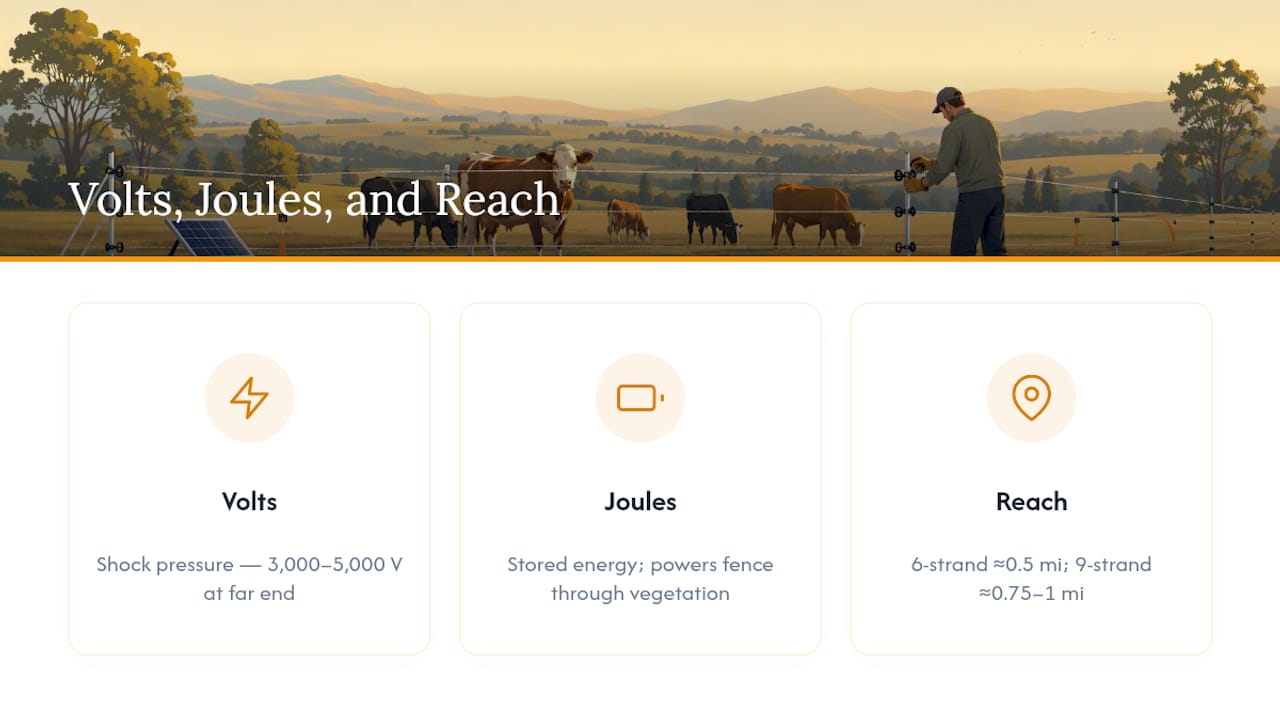
For working livestock control, aim for a minimum of 3,000 to 5,000 volts at the far end of the fence, with sheep and goats sometimes needing the higher end of that range or beyond because wool and long hair insulate against the shock.
Effective distance depends directly on strand count. A 6-strand polywire fence carries a usable charge roughly half a mile from the energizer, while 9-strand setups extend that to around three-quarters of a mile to a full mile. Beyond those distances, voltage drops enough that animals stop respecting the fence, so longer runs need either a heavier-gauge feeder wire from the charger or the energizer relocated mid-run.
Grounding is where most “my fence doesn’t work” complaints actually originate. A small solar energizer under 0.5 joules typically needs only one ground rod driven 2 to 3 feet deep, but larger systems need multiple rods spaced several feet apart, and dry or sandy soil requires deeper or additional rods to complete the circuit. Fencefast’s grounding guide for dry and low-moisture soils walks through the rod spacing math for tougher ground conditions.
What Do You Need for a Quick Temporary Fence Setup?
Pack these before you head to the field, in this order of priority:
- Reel(s) loaded with polywire, polytape, or netting
- Step-in posts (count for your perimeter plus corners)
- Energizer with charged battery or solar panel
- Ground rod and clamp
- Digital voltmeter
- Gate handle and end insulators
- Connectors and a spare splice kit
Once you’re on site, walk the perimeter first and set corner posts before filling in the line. This keeps your fence square and avoids the awkward re-stretch that happens when you string wire first and discover the corners don’t line up. Attach conductors at the height appropriate to species (26 inches minimum for cattle, lower for sheep and goats), connect the energizer, and check voltage at the farthest point of the run before turning livestock loose. Build one gate point using a insulated handle rather than cutting the fence line.
Pro Tip: Pre-make your splice connections at home with proper crimps or knots rather than improvising in the field. A rushed splice under time pressure is the most common point of voltage loss on a new fence.
Avoid overstretching polywire when tensioning. It has some give built in, and pulling it too tight strains the filaments and shortens its working life. Stage a second reel nearby if you’re planning to move the fence again within a few days.
How Do You Train Livestock to Respect an Electric Fence?
Training happens once, properly, and it saves you weeks of chasing animals through broken fence lines. Start new or naive animals in a small receiving paddock with a highly visible fence and a fully charged system. Let them find the wire on their own terms rather than pushing them toward it. Most animals need only one or two contacts to learn the boundary permanently.
Voltage targets during training and routine grazing:
- Cattle: 3,000 to 5,000 volts minimum
- Sheep and goats: often need the higher end of that range or more, since wool and hair coats insulate against the shock
- Horses: similar range to cattle, with polytape’s visibility doing much of the behavioral work
Longer-haired or heavily wooled breeds consistently need more voltage than a short-haired animal of the same species to feel the same deterrent effect. Check your voltmeter reading at the far end of the run, not just at the charger.
Once animals are trained, the labor savings come from workflow, not willpower. Set your next paddock’s forward fence before moving stock into the current one, so the move itself takes minutes. Geared reels and automatic wire lifters cut the physical effort of frequent moves substantially, which matters most on operations running rotational grazing with one or two people.
Pro Tip: Time spent conditioning animals in week one almost always beats out the setup time saved by skipping it. Producers who invest in proper training report fewer breakouts and less time re-catching animals through the whole grazing season, according to University of Maine Extension’s fencing research.
How Do You Troubleshoot and Maintain Temporary Wire Fencing?
Low or absent voltage almost always traces back to one of three culprits: vegetation contact draining the charge, a broken filament somewhere along the run, or a grounding problem. Walk the fence line with your voltmeter, checking readings every few hundred feet, since voltage drops sharply at the point of the fault rather than fading gradually. Vegetation touching the wire is the most common and easiest fix, since mowing or weed-whacking under the line usually restores full voltage immediately. A visible break needs a proper splice, not a twist-and-hope repair.
Splice repairs should use a proper knot or crimp connector rather than a simple twist, which corrodes and loses conductivity within a season. Store reeled wire dry and out of direct UV when not in use to extend its working life. Polywire holds up for roughly 10 years with careful handling, while polytape typically lasts 5 to 7 years before the filaments degrade enough to affect conductivity.
Winter brings its own problems. Ice accumulation on tape adds real weight and strain on posts, so many producers pull temporary fencing before hard freeze and designate a fixed sacrifice paddock for winter feeding instead.
How Fencefast Supports Your Temporary Fencing Setup
Fencefast has partnered with Gallagher as an authorized dealer for over 26 years, and that relationship shapes every recommendation on this site, including the equipment lists above. Content on species-specific fencing, like the cattle fencing guide and sheep fencing guide, reflects real field practice rather than generic advice.
A sensible starter kit for a first-time rotational grazing setup includes:
- One geared reel loaded with 6-strand polywire
- A solar or battery energizer sized to your run length
- Step-in posts for your perimeter count
- A ground rod kit matched to your soil type
- A voltmeter and gate handle
If your layout is more complex than a simple rectangle, or you’re applying for grant funding to expand into virtual fencing later, Fencefast’s design consulting service can help you plan the whole system before you buy a single post.
What Should You Budget for Temporary Wire Fencing?
A basic single-strand cattle paddock costs far less than most producers expect, since the core components (reel, polywire, step-in posts, and a small energizer) are inexpensive relative to permanent fencing materials. The main cost driver isn’t the wire itself. It’s the energizer, since a larger solar unit capable of powering longer runs costs considerably more than an entry-level plug-in charger.
Budget in three categories: the energizer and grounding hardware (largest one-time cost), the conductor and posts (the part you’ll buy more of as you expand paddock count), and consumables like connectors, insulators, and battery replacements (ongoing but small). Polytape roughly doubles your per-foot conductor cost versus polywire, so reserve it for laneways and high-visibility zones rather than running it across your entire grazing block.
Maintenance costs stay low if you store gear properly between seasons. Expect to replace occasional insulators and connectors yearly, plus batteries for solar units every few seasons. The wire itself is the longest-lasting line item when handled with care, often outlasting the posts and connectors around it.
Producers scaling up should price per-paddock rather than per-project. Once you know your cost for one standard paddock (reel, wire, posts, share of energizer cost), multiplying that figure by your planned paddock count gives a far more realistic total than trying to estimate the whole system at once.
How Long Does Temporary Wire Fencing Actually Last?
“Temporary” describes the fence’s mobility, not a strict expiration date. A single physical setup might stay in one spot for a single grazing rotation of a few days, or it might sit as a semi-permanent paddock divider for an entire season, moved only when you reconfigure your grazing plan.
The wire itself has a longer working life than most people assume. Handled carefully, and stored out of UV exposure between uses, polywire holds up for close to a decade, while polytape’s flatter profile and larger surface area mean it typically wears out closer to 5 to 7 years. That lifespan assumes normal handling. Wire that gets dragged through gravel, left tangled in wet grass, or run over by equipment fails much sooner.
Review your setup at two natural checkpoints. First, at the start of each grazing season, check every strand for filament breaks, sun damage, and connector corrosion before turning animals out. Second, any time you notice voltage readings dropping across a run that used to test fine, since that’s usually your first sign of wire fatigue rather than a grounding problem. Replacing a worn reel of polywire costs far less than dealing with a breakout during calving or lambing season.
Where Should You Set Up Temporary Fencing to Minimize Impact?
Site selection affects both your grazing outcomes and how well your land recovers between rotations. Avoid concentrating fence lines and gate points near streams, wetlands, or steep slopes where repeated animal traffic can accelerate erosion or contaminate water sources. Setting gates and water access points slightly back from sensitive areas gives vegetation a buffer to filter runoff.
Rotate your fence lines themselves, not just your paddocks. Running the exact same fence path season after season concentrates hoof traffic and can create a visible track that erodes faster than the surrounding pasture. Shifting your grid slightly each year spreads that impact.
Watch for wildlife corridors and known game trails when laying out netting, since electric mesh strung across a regular deer or elk crossing point creates entanglement risk. A single strand or polytape is generally easier for wildlife to clear than a full net, so consider that tradeoff in areas with heavy wildlife movement.
Finally, think about your energizer’s power source relative to site sensitivity. Solar units eliminate the need for a fuel generator or long extension cord runs, which matters if you’re fencing near sensitive habitat where extra vehicle or foot traffic to service equipment isn’t ideal.
Do You Need a Permit for Temporary Wire Fencing?
Regulatory requirements for agricultural electric fencing vary considerably by jurisdiction, and there’s no single rule that applies everywhere. Some regions treat temporary electric fencing for livestock grazing as standard farm practice requiring no permit at all, while others have setback rules from roads, property lines, or water sources, and some municipalities require warning signage on any electrified fence adjacent to public access points.
Check with your local agricultural extension office or municipal planning department before installing near a property boundary, road right-of-way, or shared water source, since these are the situations most likely to trigger a local code requirement. Extension services like University of Tennessee, Virginia Tech, Colorado State University, and the USDA’s Natural Resources Conservation Service all publish region-specific guidance, and NRCS staff can also flag when a temporary system qualifies for cost-share support under a conservation grazing plan.
Warning signage is worth posting regardless of whether your local code requires it, especially anywhere the public might walk near your fence line. It’s a small step that avoids both animal welfare complaints and simple accidents.
What Conventional Fencing Advice Gets Wrong
Most guides treat temporary wire fencing like a simplified version of permanent fencing, just cheaper and faster to build. That framing misses the point. Temporary fencing is a management tool for moving animals efficiently, and its real value shows up in the workflow around it, not the wire itself.
The conventional advice oversells equipment specs and undersells training. A fence with the right joule rating and perfect grounding still fails if animals were never properly conditioned to respect it in a controlled setting first. I’d argue the single highest-leverage investment a new grazier can make isn’t a bigger energizer. It’s a week spent training stock in a small receiving paddock before turning them loose on the real system.
The other gap: people buy for their biggest possible paddock instead of their most common one. Size your reel capacity and strand count around the runs you’ll actually make most weeks, not the rare long stretch you might need twice a season. Buy a second reel for those occasions instead of oversizing everything by default.
Get the training right first, then match your hardware to your real, weekly grazing pattern. Everything else on this list is secondary to those two decisions.
— Juiced
Get Your Temporary Fencing System From Fencefast
Fencefast is the direct source for the exact components covered in this guide, sold as a single order instead of piecing together reels, wire, energizers, and grounding hardware from multiple suppliers. As an authorized Gallagher dealer for over 26 years, Fencefast stocks the polywire, polytape, netting, step-in posts, and energizers sized to match the setups described above, plus the connectors and ground rod kits that keep a system running reliably through a full grazing season.
If your paddock layout is complicated, or you’re considering expanding into GPS-based virtual fencing down the road, Fencefast’s design consulting team can help plan the system before you spend a dollar on equipment, including guidance on available government grant programs for virtual fencing adoption. Related buying guides, including the temporary cow fence setup walkthrough and rotational grazing fencing guide, cover species-specific detail beyond what fits here.
Visit Fencefast to browse starter kits, check current energizer options, or request a consultation for your specific acreage and livestock class.
Sources
- Agricultural Engineering - Temporary Fencing For Rotational Grazing
- Temporary Fencing (Iowa Beef Center)
- Temporary Electric Fencing Equipment (Alabama Extension)

