

TL;DR:
- Properly matched anti-predator fences can reduce livestock losses by over 80%.
- Electric fencing is cost-effective and relies on psychological deterrence through high-voltage pulses.
- Maintenance, ongoing monitoring, and adapting to predator behaviors are critical for long-term effectiveness.
Losing livestock to predators is not just heartbreaking, it directly cuts into your bottom line. Canadian farmers and ranchers deal with coyotes, wolves, bears, cougars, and even feral dogs depending on where they operate. Choosing the wrong fence means repeated losses, stressed animals, and wasted money on repairs. The right anti-predator fence, matched to your specific predators and landscape, can reduce livestock losses by more than 80%. This guide breaks down how to evaluate your options, compares the leading fencing systems, and helps you decide which setup fits your operation.
Table of Contents
- How to evaluate anti-predator fence solutions
- Electric fencing: Efficient and effective
- Hybrid and multi-layer fencing: Enhanced protection
- Maintenance, cost, and climate considerations
- A practical take: What actually keeps predators away?
- Find the right anti-predator fencing solutions for your farm
- Frequently asked questions
Key Takeaways
| Point | Details |
|---|---|
| Match fence to predator | Choose fence type, design, and voltage based on which predators threaten your livestock. |
| Electric fencing is proven | Electric barriers cut predator losses by over 80% with proper installation and maintenance. |
| Hybrid solutions boost security | Combining wire and electric elements blocks even persistent diggers and climbers. |
| Maintenance and funding matter | Regular checks and leveraging government incentives make quality fencing sustainable. |
How to evaluate anti-predator fence solutions
Not every fence works against every predator. Before you spend a dollar, you need to match your fence specs to the animals you’re actually dealing with. A setup that stops coyotes won’t necessarily stop a determined black bear. Getting this right from the start saves you from expensive retrofits later.
Here are the key factors to weigh when evaluating any anti-predator fencing system:
- Predator type: Tighter wire spacing and lower strands work best for coyotes, while higher voltage and ground aprons are needed for bears.
- Fence height: Coyotes can jump, so a minimum of 54 inches is standard. Wolves and bears may require 60 inches or more with an overhang.
- Wire spacing and strand count: Closer spacing at the base prevents smaller predators from pushing through or crawling under.
- Energizer output: Voltage requirements vary. Bears and wolves need a stronger psychological deterrent than coyotes.
- Terrain and vegetation: Rocky ground, dense brush, and standing water all affect grounding and fence integrity.
- Maintenance demands: Some systems need weekly attention; others are more forgiving but cost more upfront.
- Scale of operation: A small sheep flock needs a different approach than a 500-head cattle operation spread across multiple pastures.
Cost is always part of the equation. Upfront installation can range from a few hundred dollars per kilometer for basic electric setups to several thousand for hardened hybrid systems. Factor in your labor costs for ongoing maintenance and any replacement parts.
Pro Tip: Before committing to any system, check your provincial incentive programs. Manitoba’s government fencing funding program offers up to 75% cost-share (maximum $40,000) for qualifying predator-resistant fences protecting calving areas and pastures. Other provinces have similar programs worth exploring.
Also consider how your fencing needs might change seasonally. Bears are most active in spring and fall. Coyote pressure often spikes during denning season. A good fence design accounts for these patterns rather than treating predator risk as a constant. Reviewing a solid electric fence setup guide before you start can help you avoid common layout mistakes that reduce effectiveness.
Electric fencing: Efficient and effective
Electric fencing is the most widely used anti-predator option on Canadian farms, and for good reason. It works by delivering high-voltage, low-amperage pulses that create a powerful psychological deterrent. The animal gets a sharp, memorable shock and learns to avoid the fence entirely. It doesn’t have to physically stop a predator; it just has to convince it that the fence isn’t worth testing.
The numbers back this up. An Alberta study found that electric fencing reduced sheep losses from 147 to 26 over three years across five farms, an 82% reduction. That’s a dramatic improvement that pays for the fence many times over.
For effective predator control, follow these electric fence best practices:
- Voltage: Maintain 5,000 to 10,000 volts. Anything below 4,000V under load is not reliable.
- Strand count: Use 4 to 7 wires, with the lowest strand no more than 6 inches off the ground.
- Energizer sizing: Match your energizer to the total fence length and expected vegetation load. Undersized energizers are the most common setup mistake.
- Grounding: Install at least three ground rods spaced 10 feet apart. Poor grounding is the top reason electric fences underperform.
- Testing: Check voltage weekly. A fence that looks intact can still be losing power to vegetation or a broken insulator.
“Electric fencing is one of the most cost-effective tools available for predator control, but only when it’s properly installed and consistently maintained.” Alberta Agriculture and Irrigation recommends following electric fence recommendations specific to your predator profile.
Pro Tip: For poultry protection or rotational grazing, portable electric netting is a flexible option. It’s quick to move, provides solid low-level protection, and works well when paired with a good energizer. Check out electric fencing for sheep for species-specific guidance on strand placement and voltage requirements.
One thing many farmers overlook is the importance of a proper fence setup guide during initial installation. Getting the layout right the first time, especially corner bracing and energizer placement, prevents most of the problems that show up later.
Hybrid and multi-layer fencing: Enhanced protection
Electric fencing handles most predator situations well, but persistent predators like wolves and bears sometimes need a harder physical barrier to back up the electric deterrent. That’s where hybrid fencing earns its place.
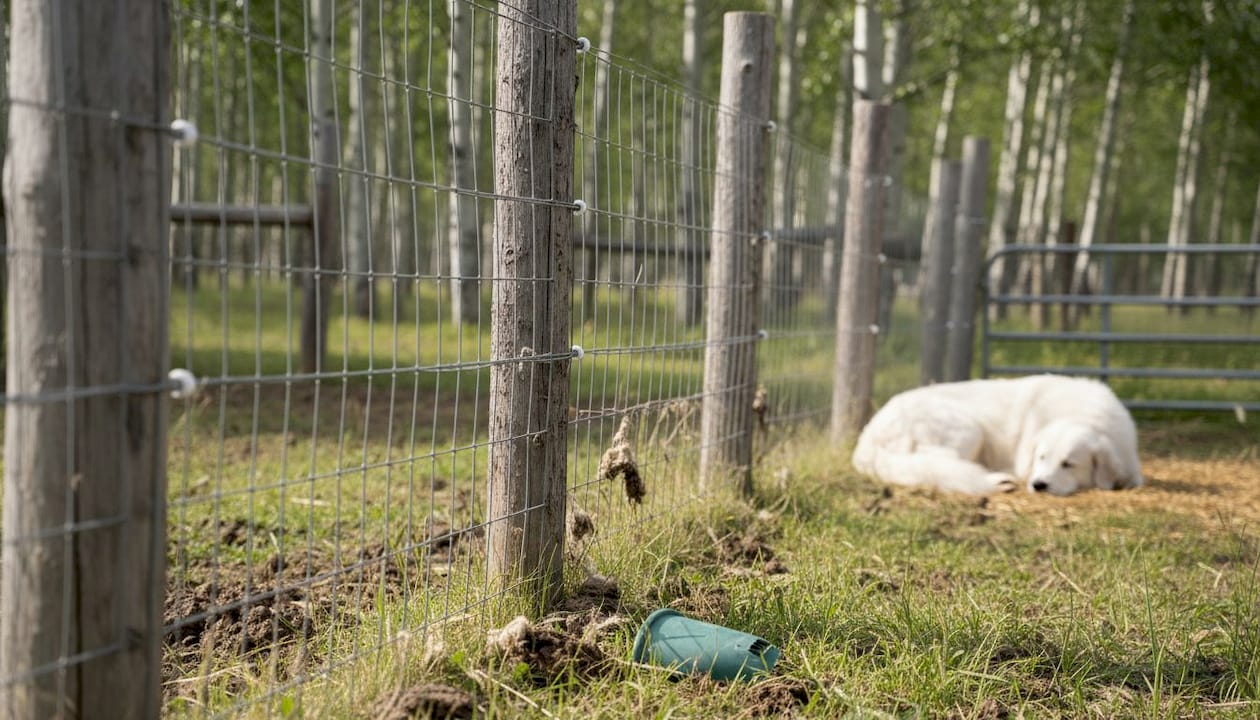
A hybrid fence combines a woven wire base with electric strands, ground aprons extending 12 to 18 inches outward to stop digging, and overhangs angled away from the livestock area to prevent climbing. Each element targets a specific predator behavior.
Here’s how to build a hybrid system effectively:
- Start with a woven wire base. Use high-tensile woven wire at least 48 inches tall as your physical foundation.
- Add electric offset wires. Run 2 to 3 electric strands above and in front of the woven wire to deliver a shock before a predator even contacts the physical barrier.
- Install a ground apron. Lay wire flat on the ground extending outward from the fence base to stop digging. Secure it with stakes or cover with gravel.
- Add an overhang at the top. Angle the top section outward at 45 degrees. This stops bears and large canines from getting a grip to climb.
- Maintain clear sight lines. Trim vegetation along the fence line regularly so you can spot damage quickly.
| Hybrid element | Target predator behavior | Effectiveness |
|---|---|---|
| Woven wire base | Pushing through | High for coyotes, wolves |
| Electric offset strands | Nose contact deterrence | High for bears, wolves |
| Ground apron | Digging under | High for coyotes, foxes |
| Angled overhang | Climbing over | High for bears |
Hybrid systems cost more upfront than basic electric fences, but they’re the right choice when losses are frequent or when you’re dealing with a persistent individual animal that has already learned to test your fence. Reviewing wildlife fencing strategies can help you decide which hybrid elements make sense for your specific situation.
Maintenance, cost, and climate considerations
Any fencing solution is only as good as its maintenance. A well-designed fence that isn’t checked regularly will fail, and in most cases it will fail at the worst possible time, during calving season or a stretch of bad weather.
Here are the core maintenance tasks every farmer should build into their routine:
- Weekly voltage tests: Your fence should read above 4,000V under load at all times. If it drops, trace the fault before the next night.
- Vegetation clearing: Grass and brush touching the wire bleeds voltage fast. Clear a 12-inch strip along the fence line regularly.
- Ground rod inspection: Dry summers reduce grounding effectiveness. Water your ground rods during drought or add additional rods.
- Physical inspection: Walk the fence line after storms, freeze-thaw cycles, and any suspected predator activity.
Canadian winters add another layer of challenge. Snow load can down wires, frozen ground reduces grounding efficiency, and extreme cold affects energizer performance. Choose energizers rated for your climate zone and consider solar-powered backup options for remote pastures.
| Fence type | Typical cost per km | Maintenance interval | Winter suitability |
|---|---|---|---|
| Basic electric | $500 to $1,500 | Weekly | Moderate (needs winter-rated energizer) |
| Woven wire | $3,000 to $6,000 | Monthly | High |
| Hybrid system | $5,000 to $10,000+ | Weekly to monthly | High |
Government programs can significantly offset these costs. Manitoba’s Livestock Fencing Resiliency Program covers up to 75% of eligible costs (maximum $40,000) for predator-resistant fences around calving areas and pastures. Check your province’s current programs before finalizing your budget.
Pro Tip: Review electric fence safety tips before installing or upgrading your system. Proper signage, safe energizer placement, and correct grounding protect both your animals and anyone working near the fence. You can also explore a wildlife-friendly fence design guide if your property borders wildlife corridors or conservation areas.
A practical take: What actually keeps predators away?
Here’s the honest truth that most fencing articles won’t tell you: the fence is only part of the solution. We’ve seen operations spend serious money on top-tier hybrid systems and still lose animals because they stopped checking voltage after the first month. Consistent maintenance and adapting your approach as threats evolve matter more than any single fence design.
Many farmers underestimate how quickly predator behavior changes. A coyote that gets shocked once will often test again from a different angle or at a different time of day. Wolves are even more persistent. The farms that see the best long-term results are the ones treating predator control as an ongoing practice, not a one-time installation.
Hardened hybrid fences pay off fastest when losses are already frequent. If you’re losing multiple animals per season, the cost-benefit math on a hybrid system is obvious. But if you’re dealing with occasional pressure, a well-maintained electric fence with proper grounding is often enough.
Pairing your fence with electric fencing for bison style perimeter thinking, guardian animals like livestock dogs or llamas, and proper carcass removal from pastures creates overlapping layers of deterrence that no single fence can match on its own.
Find the right anti-predator fencing solutions for your farm
For farmers ready to act, sourcing proven anti-predator fencing products is the next step. Choosing the right equipment for your specific livestock and predator profile makes a measurable difference in how well your fence performs over time.

At FenceFast, we carry products designed for Canadian climates and real predator pressure. Whether you need a complete electric fence accessory kit to get started quickly or bear-resistant netting for high-pressure areas, we can help you build a system that fits your operation. Our team offers design consulting and can connect you with government funding programs available in your province. We ship nationwide across Canada.
Frequently asked questions
What is the best fence to stop coyotes or wolves?
Electric fencing with 4 to 7 tight wire strands and at least 5,000 volts is the most effective option, with Alberta data showing an 82% reduction in sheep losses over three years.
How should anti-predator fences be maintained?
Check voltage weekly to confirm it stays above 4,000V under load, keep wire clear of vegetation, and maintain at least three properly spaced ground rods.
Are there funding programs for predator-proof fencing in Canada?
Yes, Manitoba’s Livestock Fencing Resiliency Program offers up to 75% cost-share for qualified predator-resistant fencing, and other provinces have similar programs worth checking.

