

TL;DR:
- eShepherd virtual fencing achieves up to 98% cattle containment within 72 hours using GPS neckbands.
- Proper setup, training, and hybrid physical-virtual systems are essential for effective land management.
- Connectivity challenges in remote areas can be mitigated with LoRa technology and backup physical fences.
Up to 98% containment is achievable within 72 hours using GPS-guided neckbands alone, without a single wire post driven into the ground. For Canadian ranchers managing large acreage across difficult terrain, that number reframes everything. Traditional fencing demands enormous time, materials, and labor every season. eShepherd virtual fencing flips that model, using audio cues, mild pulses, and real-time app control to contain and move cattle remotely. This article breaks down exactly how the technology works, how to set it up, how to train your herd, and what challenges to expect so you can decide whether it belongs on your operation.
Table of Contents
- What is eShepherd virtual fencing?
- Setting up eShepherd: Steps and requirements
- Training cattle: Process, duration, and best practices
- Managing livestock and land with eShepherd
- Challenges, edge cases, and how to solve them
- Our perspective: What most guides miss about virtual fencing
- Explore eShepherd solutions for Canadian ranchers
- Frequently asked questions
Key Takeaways
| Point | Details |
|---|---|
| High containment rates | eShepherd achieves up to 98% cattle containment in 72 hours with proper training. |
| Efficient boundary control | Virtual fencing lets farmers set and adjust digital paddocks remotely with real-time tracking. |
| Labor and fuel savings | Canadian ranchers save up to 4-5 hours daily by managing livestock virtually. |
| Hybrid fencing best | Combining physical and virtual systems ensures reliable operation, especially in challenging terrain. |
| Practical limitations exist | Connectivity, animal type, and terrain affect performance; expertise and planning are key. |
What is eShepherd virtual fencing?
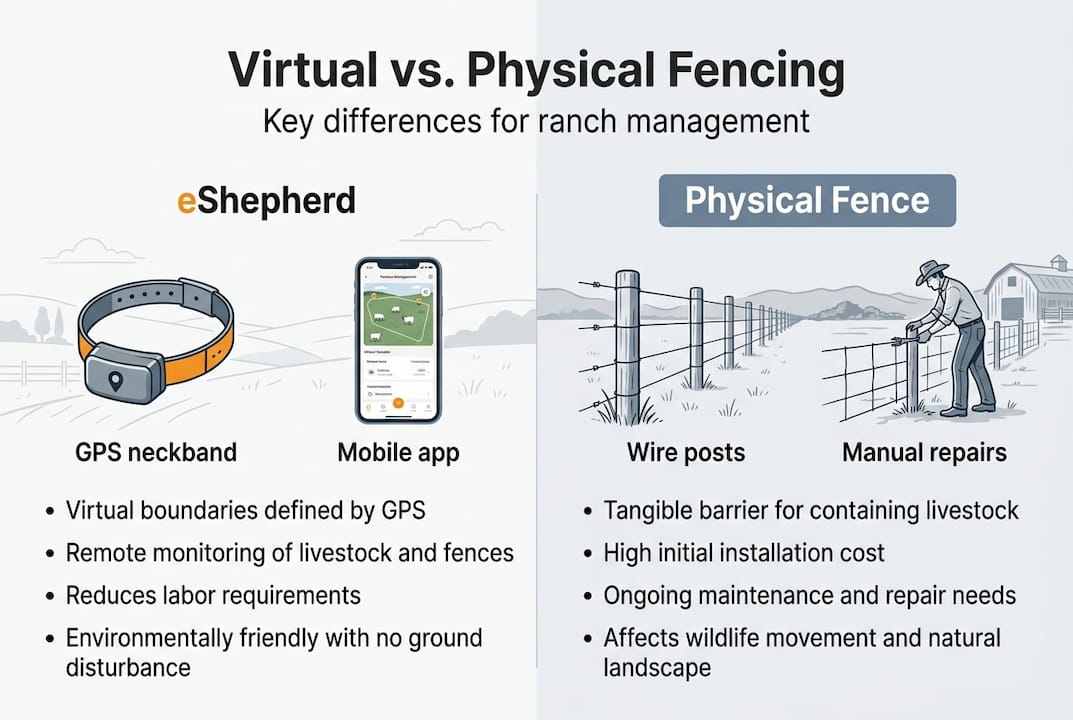
At its core, eShepherd replaces the physical barrier with a digital one. Instead of stringing wire, you draw boundaries on an app, and the cattle learn to respect those invisible lines through conditioned response. It sounds simple, but the engineering behind it is precise.
The system relies on solar-powered GPS neckbands fitted to individual cattle. Each neckband tracks the animal’s location in real time. When a cow moves toward a virtual boundary drawn in the app, the neckband first sounds an audio tone. If the animal keeps moving, it receives a mild electrical pulse. Most cattle learn quickly to turn back at the tone alone, making the pulse largely unnecessary after initial training.
For a broader look at how virtual fencing works across livestock types), the science of conditioned response is well established. What eShepherd does is apply that science with practical precision at the ranch scale. You can get more context on virtual fencing explained for Canadian operations specifically.
Key eShepherd components at a glance:
- Solar-powered GPS neckbands (waterproof, cattle-rated)
- Base station for connectivity
- eShepherd app and web interface for boundary mapping
- LoRa radio technology for remote area coverage
eShepherd vs. traditional fencing: A quick comparison
| Feature | eShepherd Virtual Fencing | Traditional Physical Fencing |
|---|---|---|
| Boundary flexibility | Instant, app-adjusted | Fixed, labor-intensive to move |
| Setup time | Hours | Days to weeks |
| Ongoing maintenance | Low (solar-powered) | High (post, wire, staple checks) |
| Remote management | Yes, via app | No |
| Terrain adaptability | High | Limited by terrain |
| Cost per acre (long-term) | Lower at scale | Higher with large land parcels |
“eShepherd’s technology allows precise, flexible management without physical wire fences, giving ranchers the ability to reshape boundaries as quickly as their grazing plan requires.”
If you want to brush up on fencing basics before integrating virtual solutions, that foundation makes the transition smoother.
Setting up eShepherd: Steps and requirements
Getting eShepherd running on your ranch is more straightforward than most ranchers expect. The hardware is purpose-built for agricultural conditions, and the software is designed for people who manage cattle, not IT departments.
Here is the typical setup sequence:
- Fit neckbands on cattle. Each neckband is solar-powered, waterproof, and GPS-enabled. Fit them snugly but comfortably, following the manufacturer’s guidelines for band sizing.
- Install the base station. Position it at a high point on your property for maximum radio range. This is the hub that communicates with neckbands.
- Download the eShepherd app or access the web interface. Both platforms allow you to draw virtual paddocks, monitor animals, and receive alerts.
- Map your first boundaries. Start with simple, geometric shapes. Avoid complex paddocks with many corners during the initial training phase.
- Check connectivity. Confirm that neckbands are syncing with the base station before releasing cattle into virtual paddocks.
Virtual boundaries are drawn via app, and the system can operate offline for up to 24 hours if connectivity is lost, which matters a great deal in remote Canadian landscapes.
For ranchers in areas with poor cellular coverage, LoRa radio technology bridges the gap. It is a low-power, long-range communication protocol that keeps neckbands connected even when your cell signal disappears. According to labor cost savings data, the reduction in daily labor alone often justifies the technology investment within the first season.
For a practical comparison of physical and virtual containment options, our temporary fencing guide covers the kind of hybrid setups that pair well with eShepherd.
Pro Tip: Before your first deployment, walk your property and test neckband connectivity at the edges of your planned paddocks. A five-minute check prevents a whole day of troubleshooting.
Training cattle: Process, duration, and best practices
Once the system is installed, the next crucial step is training cattle to respect virtual boundaries. This is where many ranchers have questions, and the data is reassuring.
Training takes 3 to 10 days, with most herds reaching 95 to 98% containment within the first 72 hours. Social learning plays a big role. When one animal responds to the audio cue and turns back, others nearby observe and follow. This is why starting with groups of 20 or more is strongly recommended.
Training outcomes by method:
| Training Approach | Containment Rate | Timeframe |
|---|---|---|
| Group training (20+ animals) | 95-98% | 72 hours |
| Smaller groups (<10 animals) | Lower initially | 5-10 days |
| Individual training | Most variable | 7-10 days |
| Yearlings (adjusted protocol) | 90-95% | 5-7 days |
Yearlings behave differently from mature cows. They tend to be more reactive and less settled in their grazing patterns, so virtual fencing research recommends extending the training window and using simpler boundary shapes for young stock.
Key factors for successful training:
- Use simple paddock shapes during the first week
- Start with a group large enough for social reinforcement
- Avoid moving boundaries too quickly in the early days
- Monitor neckband alerts daily for outliers who are struggling
- Follow established animal welfare protocols throughout
For real-world examples of how Canadian ranchers are making this work, our guide on virtual fencing for BC ranches covers terrain and herd-specific lessons. If you have heard concerns about the technology, our piece on virtual fencing myths addresses the most common ones with evidence.
Managing livestock and land with eShepherd
After training, here is how eShepherd adapts to everyday management and maximizes ranch efficiency. This is where the technology pays for itself in real time.
The app provides real-time GPS tracking so you can see every animal’s location without driving the property. Paddock rotations that used to require a truck, a quad, and two people can now be done from your phone at the kitchen table. You draw the new boundary, the system updates, and cattle respond to the shift.
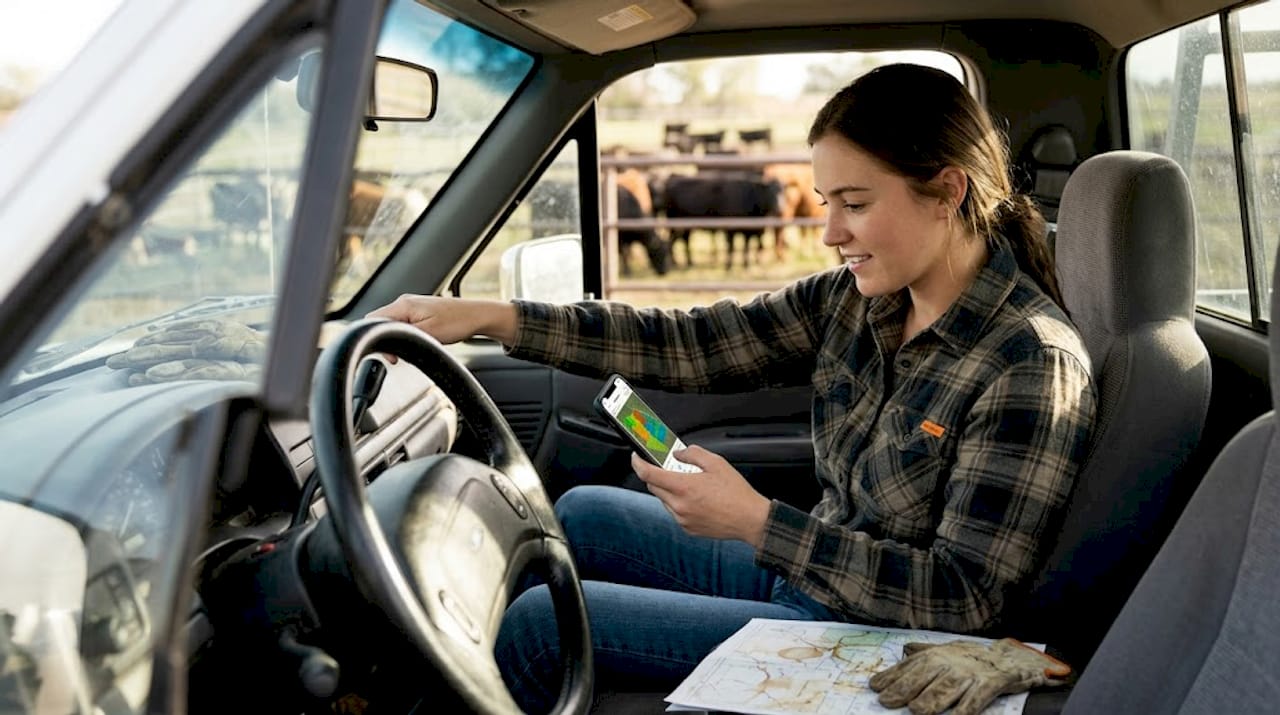
The efficiency gains are significant. Operators save 4 to 5 hours per day on labor while also achieving better forage utilization through tighter rotational grazing control. That is time and grass you get back every single day.
Daily management tasks eShepherd streamlines:
- Check animal locations on the app each morning
- Rotate paddocks remotely as forage is consumed
- Set exclusion zones around waterways or sensitive areas
- Receive alerts if an animal approaches or exits a boundary
- Review grazing pressure and adjust paddock size accordingly
For ranchers interested in the full benefits of rotation, our articles on rotational grazing fencing benefits and rotational grazing fence tips show how eShepherd fits into a broader land management plan. If you are looking at options across Canada, our rotational grazing solutions overview covers regional considerations.
Pro Tip: When you need to move cattle to a new area remotely, use feed attractants at the destination and then shift the virtual boundary. Cattle follow their nose, and the system reinforces the move.
Challenges, edge cases, and how to solve them
Even with robust technology, there are some challenges Canadian ranchers need to be prepared for. Being realistic about limitations helps you plan the hybrid setup that actually works.
Connectivity in remote terrain is the most common obstacle. LoRa radio handles poor cellular areas well, but heavy timber and mountain terrain can still limit signal range. Position your base station thoughtfully, and consider multiple units on very large properties.
Offline operation is designed to last up to 24 hours, but if connectivity is lost beyond that window, escape risk rises. Backup physical fencing in perimeter areas remains a smart precaution, especially near roads or property lines.
Animal density has a practical ceiling. The system works effectively up to about 8 animals per hectare. Beyond that, the close proximity of animals can confuse boundary learning during training.
Statistic: Post-training containment of up to 98% is achievable, but that figure depends on proper setup, trained operators, and appropriate terrain.
Common edge cases and solutions:
- Poor cellular coverage: Deploy LoRa base stations; check virtual fencing research on connectivity options
- Signal blocked by dense trees: Elevate base station antenna or use multiple units
- Escapes after extended offline period: Maintain perimeter physical fencing as a backup
- Yearlings struggling with training: Extend training period, simplify paddock shapes
- High-stress introduction: Follow welfare protocols; never rush the training phase
As established in the research), eShepherd is not a full replacement for physical fences in all situations. It works best as part of a hybrid system where electric fencing options handle perimeters and virtual fencing controls internal paddock rotation. Our guide on temporary cow fence setups covers the kinds of physical backup that pair well with this technology.
Our perspective: What most guides miss about virtual fencing
Most articles about eShepherd focus on the technology specs. What they miss is the operator side of the equation. The system is only as good as the person managing it.
We have seen ranchers get excellent results and others struggle, and the difference is almost never the equipment. It is preparation, patience during training, and realistic expectations about what virtual fencing can and cannot do. Long-term data gaps exist) for species other than cattle, and social acceptability questions are still being worked through in some regions.
“The best ranches combine digital and physical strategies. It is not either/or, it is both working together.”
Animal welfare protocols are not optional fine print. They are the foundation of a successful rollout. Rushing training to hit a grazing schedule is the fastest way to undermine the whole system. The ranchers who invest time in proper early training see benefits that compound through every subsequent rotation.
For anyone still uncertain about common misconceptions, our virtual fencing myths guide cuts through the noise with practical evidence.
Pro Tip: Treat the first two weeks as a training investment, not a delay. Every hour spent on proper conditioning pays back tenfold in reduced labor and better grazing outcomes all season.
Explore eShepherd solutions for Canadian ranchers
Ready to move from wire and posts to GPS-powered boundary control? FenceFast.ca has everything Canadian ranchers need to get started with eShepherd virtual fencing, from neckbands and base stations to expert setup guidance and access to government funding programs like OFCAF and BMP grants.

As an authorized Gallagher dealer with 26 years of experience serving Canadian agriculture, FenceFast eShepherd solutions are backed by real product knowledge and hands-on support. Whether you are just researching or ready to order, our virtual fencing guide walks you through every step. Reach out to our team for personalized advice on system sizing, connectivity planning, and making the most of available grant funding in your province.
Frequently asked questions
How do eShepherd GPS neckbands keep cattle contained?
The neckbands emit an audio cue when cattle approach a virtual boundary, followed by a mild electrical pulse if the animal does not respond. After training, most cattle react to the audio tone alone without needing the pulse.
What is the typical timeframe for training cattle with eShepherd?
Most herds reach 95 to 98% containment within the first 72 hours, with full training typically completed in 3 to 10 days depending on herd size and age.
Can eShepherd work in remote or mountainous areas?
Yes, LoRa radio connectivity covers most remote conditions, but heavy timber and terrain can limit signal range, making physical perimeter fencing a smart backup in those areas.
Does eShepherd eliminate the need for physical fences?
No. As research confirms), virtual fencing works best in a hybrid system where physical fences handle perimeters and virtual boundaries manage internal rotations.
What livestock types are compatible with eShepherd?
The system is designed for cattle; sheep and other livestock species are not currently supported by the eShepherd platform.
Recommended
- What is virtual fencing for cattle? Herd control explained – FenceFast Ltd.
- Virtual Fencing for BC Ranches: Boost Grazing, Cut Costs – FenceFast Ltd.
- Weigh System Helps Cattle Producer Make Better Management Decisions – FenceFast Ltd.
- 3 Virtual Fencing Myths Every Farmer Should Know – FenceFast Ltd.

