

Alberta farmers saw sheep losses plummet from 147 to 26 over three years after installing electric predator fencing. That’s an 82% reduction in predation, translating to thousands of dollars saved and fewer sleepless nights worrying about coyotes, wolves, or bears threatening your livestock. Predator control fencing isn’t just about physical barriers; it’s a strategic investment in non-lethal wildlife management that protects your animals, your income, and your peace of mind. This guide walks you through selecting, designing, and maintaining effective predator fencing tailored to Canadian farming conditions.
Table of Contents
- Key takeaways
- Why predator control fencing matters for Canadian farmers
- Types of predator control fencing and how they work
- Design and maintenance best practices for effective predator fencing
- Funding and practical considerations for Canadian farmers
- Protect your farm with FenceFast predator control fencing solutions
- Frequently asked questions
Key Takeaways
| Point | Details |
|---|---|
| Electric fence effectiveness | Electric predator fencing can dramatically decrease livestock losses, as shown by Alberta farms reducing sheep predation by 82 percent over three years. |
| Hybrid fence design | Combining electric wires with physical barriers such as woven wire, aprons and overhangs creates both psychological deterrence and a durable physical barrier. |
| Maintenance matters | Keeping the system powered and regularly maintained is critical to sustaining deterrence and preventing fence failures. |
| Cost share advantage | Government cost share programs can ease upfront investment costs, with Manitoba highlighted as a region where uptake supports predator fencing installation. |
| Non lethal approach | Non lethal fencing methods are preferred for sustainable predator control without triggering recolonization cycles. |
Why predator control fencing matters for Canadian farmers
Predators like coyotes, wolves, and bears cause devastating livestock losses across Canada every year. You lose animals, income, and the emotional toll of finding injured or dead livestock weighs heavily. Financial impacts extend beyond direct animal value: veterinary bills, increased stress on surviving animals, and reduced productivity compound the problem. Electric fencing reduced sheep losses from 147 to 26 over three years on five Alberta farms, proving that well-designed fencing delivers measurable protection.
Lethal predator control often backfires. Removing individual predators creates territory vacancies that attract new animals, sometimes younger and less experienced hunters that take riskier prey like livestock. Fencing offers a sustainable alternative by creating psychological and physical barriers without triggering recolonization cycles. It’s a proactive strategy that works with wildlife behavior rather than against it.
Canadian farming conditions demand robust solutions. Extreme cold, deep snow, and varied terrain challenge fence performance. Understanding your local predator pressures helps you tailor fencing designs. Coyotes require different wire spacing than wolves; bears need stronger materials and higher voltages. Choosing durable agricultural fencing starts with knowing what you’re protecting against.
Fencing integrates into broader predator management strategies. Combine it with livestock guardian animals, strategic pasture rotation, and timely carcass removal for comprehensive protection. Each element reinforces the others, creating layered defense that reduces predation risk substantially. Fencing forms the foundation of this approach, providing consistent protection that other methods complement.
Common predator challenges by region:
- Prairie provinces: Coyotes and occasional wolves targeting sheep, calves, and poultry
- Mountain regions: Bears, cougars, and wolves threatening cattle and sheep
- Northern areas: Wolves and bears with seasonal pressure on livestock
- Mixed farmland: Coyotes, foxes, and raccoons affecting smaller livestock and poultry
Types of predator control fencing and how they work
Electric fencing delivers high-voltage, low-amperage pulses that create psychological deterrence. Predators touch the wire, receive a memorable shock, and learn to avoid the area. Voltages between 5,000 and 10,000 volts effectively deter most predators without causing permanent harm. The psychological impact matters more than physical blocking; predators remember the shock and choose easier hunting grounds.
High-voltage electric fences with 4-7 strands effectively deter coyotes, wolves, and bears when properly maintained. Wire spacing varies by target species: tighter spacing near ground level stops smaller predators, while upper wires deter larger animals. Combining electric wires with woven wire bases creates hybrid systems that address both psychological and physical breach attempts.
Physical barriers like woven wire or welded mesh prevent predators from pushing through or climbing over. Ground aprons extending 12-18 inches outward stop digging, while overhangs angled outward prevent climbing. These barriers work continuously without power but lack the psychological deterrence of electric systems. They’re most effective when combined with electrified top wires.
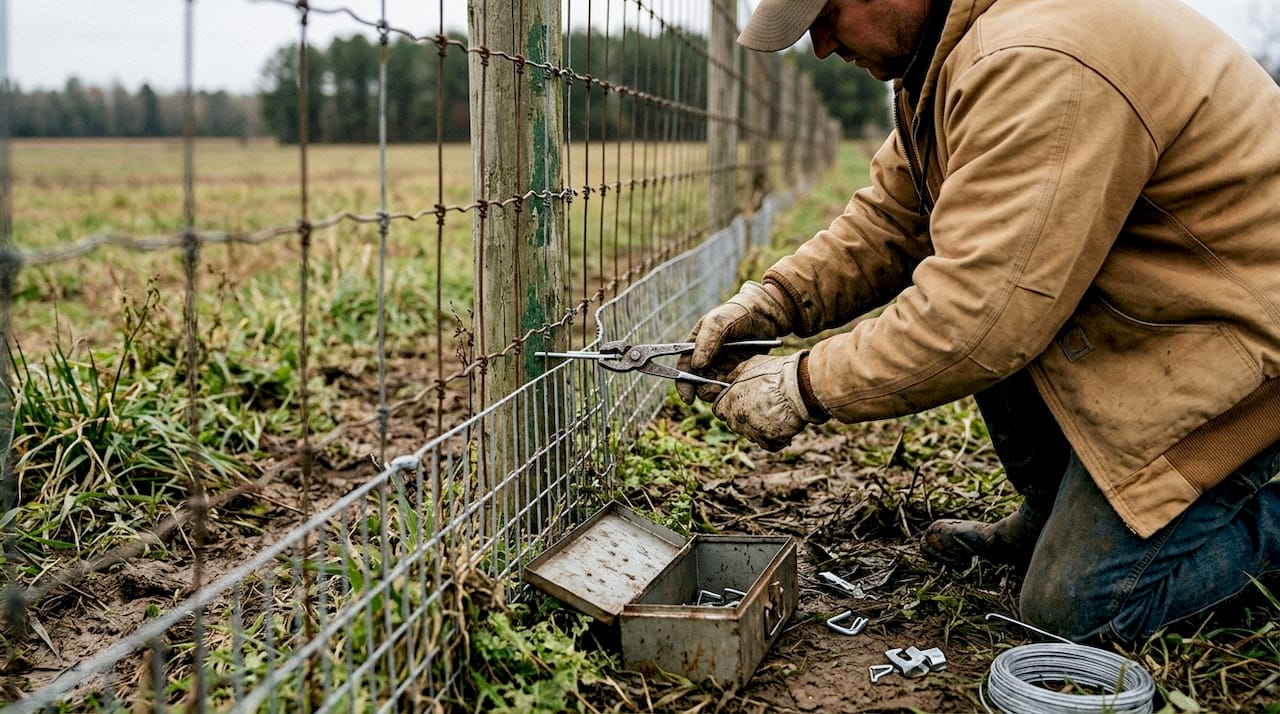
Electric netting offers portable predator protection for rotational grazing. The mesh design provides both physical barrier and electrified deterrence in one system. It’s particularly effective for poultry and sheep operations that move animals frequently. Setup takes minutes compared to permanent fencing, though it requires careful attention to ground contact for proper electrification.
| Fence Type | Primary Mechanism | Best For | Voltage Range | Maintenance Level |
|---|---|---|---|---|
| Electric only | Psychological deterrence | Large pastures, cattle | 7,000-10,000V | Medium (voltage checks, vegetation) |
| Woven wire + electric | Physical + psychological | Sheep, goats, calves | 5,000-8,000V | Low (occasional wire checks) |
| Electric netting | Combined barrier/shock | Rotational grazing, poultry | 4,000-6,000V | Medium (frequent moves, connections) |
| High-tensile with apron | Physical prevention | Persistent diggers, bears | N/A or 8,000V+ | Low (annual tension checks) |
Electric fences reduce deer and wildlife damage by 80-90%, demonstrating effectiveness beyond just predator control. This versatility makes electric systems valuable investments that protect crops and livestock simultaneously. Understanding basic electric fence setup principles helps you choose systems matching your operation’s needs.
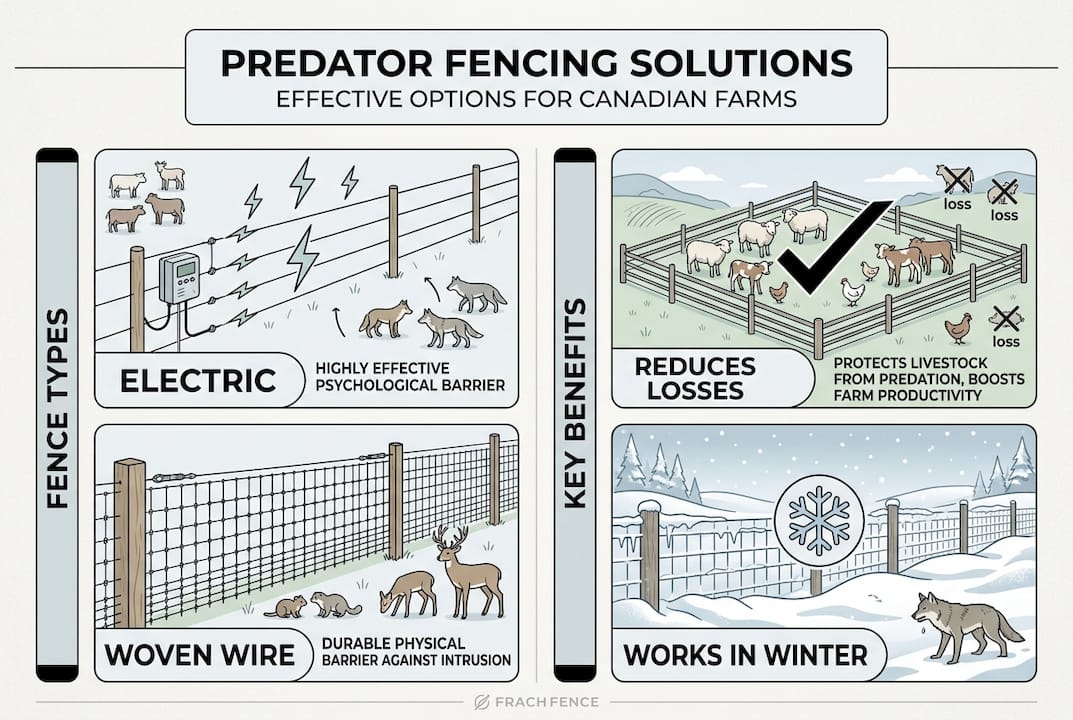
Hybrid approaches combine the best features of each system. A woven wire base prevents physical breaches while electrified top wires provide psychological deterrence. Ground aprons stop digging and electrified offset wires prevent climbing. This layered defense addresses multiple breach methods, creating comprehensive protection that single-system fences can’t match. Consider wildlife friendly fence designs that protect livestock while allowing safe passage for non-threatening wildlife.
Design and maintenance best practices for effective predator fencing
Wire spacing determines which predators your fence stops effectively. Space bottom wires 6 inches apart for coyotes and foxes, increasing to 8-12 inches for upper strands. Wolves require similar spacing but benefit from additional height. Bears need fewer, higher strands (4-5 wires) with the bottom wire 12-18 inches up to avoid false triggers from vegetation.
Voltage maintenance separates effective fences from failures. Optimal fence includes 3-5 wires spaced 6-12 inches at various heights with voltages 7,000-10,000V plus proper grounding and aprons. Test voltage weekly during active predator seasons using a digital fence tester. Readings below 4,000V under load indicate problems requiring immediate attention.
Grounding systems make or break electric fence performance. Install at least three 6-foot ground rods spaced 10 feet apart in moist soil. Poor grounding prevents effective shocks even with adequate voltage at the charger. Test your ground system by creating an intentional short and measuring voltage at ground rods; readings above 400V indicate insufficient grounding.
Power supply considerations for Canadian winters:
- Size chargers for fence length plus 30% reserve capacity
- Install solar and deep-cycle batteries to maintain power during extreme cold
- Protect chargers and batteries in insulated enclosures
- Use low-impedance chargers that maintain voltage under vegetation load
- Monitor battery voltage weekly; replace when capacity drops below 80%
Vegetation management prevents most fence failures. Grass, weeds, and branches touching wires create shorts that drain voltage. Clear a 3-foot zone on both sides of fence lines before growing season. Mow or spray regularly through summer. Fallen branches after storms cause immediate shorts requiring prompt removal.
Seasonal maintenance ensures year-round protection. Spring checks identify winter damage from snow load, frost heaving, or wildlife contact. Tighten loose wires, replace damaged insulators, and test all connections. Fall preparation includes final vegetation clearing and battery condition checks before winter. Mid-winter inspections verify continued operation despite snow and cold.
Pro Tip: Install fence monitoring systems that alert you via text or email when voltage drops below safe thresholds. This early warning prevents extended periods of ineffective deterrence that predators quickly learn to exploit. Modern monitors like the Gallagher i-Series provide real-time fence status from your phone.
Aprons and overhangs address physical breach attempts. Bury 12-18 inch wire aprons horizontally at fence base, secured with stakes every 2 feet. Predators digging under encounter the barrier and typically abandon the attempt. Angled overhangs extending 12 inches outward at 45 degrees stop climbing predators from gaining purchase to go over the top.
| Maintenance Task | Frequency | Purpose | Critical Period |
|---|---|---|---|
| Voltage testing | Weekly | Verify adequate deterrence | Spring-fall |
| Vegetation clearing | Bi-weekly | Prevent shorts | Growing season |
| Wire tension check | Monthly | Maintain proper height/spacing | Year-round |
| Battery condition | Weekly | Ensure power supply | Winter |
| Ground system test | Quarterly | Verify effective shocking | Spring, fall |
| Full fence walk | Monthly | Identify damage/wear | Year-round |
Understand electric fence building and testing fundamentals before installation. Proper initial setup prevents chronic problems that undermine effectiveness. Consider solar powered electric fence options for remote pastures where grid power is impractical.
Funding and practical considerations for Canadian farmers
Manitoba offers up to 75% cost-share funding (max $40,000) for predator-resistant fencing through the Livestock Predator Prevention Program. This substantial support makes high-quality fencing affordable for operations of all sizes. Application processes typically open in winter for spring installations, so plan ahead and gather required documentation early.
Other provinces offer varying support levels. Check with your provincial agriculture department about available programs. Some regions provide technical assistance and design consultation even without direct funding. Federal AgriRecovery programs may activate after severe predator events, providing emergency assistance for affected producers.
Budget for complete systems, not just wire and posts. Solar chargers, deep-cycle batteries, ground rods, insulators, gates, and monitoring equipment add up quickly. Quality components cost more upfront but deliver better performance and longevity. Cheap chargers and inadequate grounding cause most fence failures, wasting your entire investment.
Common implementation challenges:
- Vegetation shorting wires requires diligent clearing schedules
- Winter battery failures from inadequate capacity or protection
- Horned livestock tangling in netting-style fences
- Rocky soil complicating post installation and grounding
- Irregular terrain requiring careful wire height management
- Wildlife learning to breach fences during power outages
Address horned livestock concerns by choosing appropriate fence styles. Woven wire with offset electric strands works better than netting for cattle with horns. Space wires to prevent head entanglement while maintaining effective predator deterrence. Polywire and polytape reduce entanglement risk compared to smooth high-tensile wire.
Non-randomized studies overestimate fence effectiveness; rigorous design and monitoring recommended. This scientific critique highlights the importance of proper evaluation. Track predation events before and after installation, document fence maintenance, and record all relevant variables. This data helps you optimize your system and demonstrates effectiveness for cost-share program reporting.
Pro Tip: Start with a small pilot installation protecting your highest-value or most vulnerable animals. Learn the maintenance requirements and refine your approach before scaling up to entire pastures. This reduces initial investment risk and builds practical knowledge that ensures success with larger projects.
Integrate fencing with complementary strategies. Livestock guardian dogs, llamas, or donkeys provide mobile protection that fencing can’t match. Remove carcasses promptly to avoid attracting predators. Rotate pastures to prevent predictable patterns predators learn to exploit. Time lambing and calving to periods when predator pressure is lowest.
Plan for long-term costs beyond installation. Budget $200-500 annually per mile for maintenance, repairs, and power supply. Replace worn components proactively before failures occur. Consider solar electric fence chargers that eliminate ongoing power costs while providing reliable operation in remote areas. Review electric fence setup fundamentals to ensure your system operates efficiently from day one.
Protect your farm with FenceFast predator control fencing solutions
You’ve learned how effective predator fencing protects livestock and reduces losses. Now it’s time to implement these strategies on your operation. FenceFast specializes in agricultural fencing solutions designed specifically for Canadian farming conditions. Their electric and exclusion systems meet the voltage and design standards proven effective in Alberta trials and recommended by provincial agriculture departments.

FenceFast offers complete predator control systems including high-voltage chargers, durable wire and netting, grounding equipment, and monitoring technology. The Patriot Predator Bear Exclusion Netting provides portable protection for rotational grazing, while permanent installations benefit from their full range of posts, insulators, and energizers. Track fence performance with the Gallagher i-Series Fence Monitor that alerts you instantly when voltage drops. Expert support helps you design systems matching your specific predator challenges, livestock types, and terrain. Investing in quality fencing protects your animals, preserves your income, and delivers peace of mind knowing your livestock are safe.
Frequently asked questions
What is predator control fencing?
Predator control fencing uses physical barriers and electric deterrence to prevent wild animals from accessing livestock areas. These specialized fences combine high-voltage wires that deliver memorable but non-lethal shocks with physical barriers like woven wire or mesh that block entry attempts. Designs vary based on target predators, with wire spacing, height, and voltage tailored to deter coyotes, wolves, bears, or smaller predators. The goal is creating a psychological and physical boundary that predators learn to avoid, protecting livestock without requiring lethal control methods.
How effective is electric fencing at reducing livestock losses?
Effectiveness depends heavily on design quality, voltage maintenance, and predator species. Electric fencing reduced sheep losses from 147 to 26 over three years in Alberta trials, representing an 82% reduction. Properly maintained systems with adequate voltage (7,000-10,000V) and appropriate wire spacing consistently deliver 70-90% loss reduction across various predator types. However, poor maintenance, inadequate grounding, or vegetation shorting wires dramatically reduces effectiveness. Success requires ongoing commitment to voltage testing, vegetation clearing, and prompt repairs when problems arise.
Are there financial assistance programs for predator fencing in Canada?
Manitoba offers up to 75% cost-share funding for predator-resistant fencing through the Livestock Predator Prevention Program, with maximum grants of $40,000 per operation. Other provinces provide varying levels of support; contact your provincial agriculture department for current program details. Federal AgriRecovery programs may activate after severe predator events, providing emergency assistance. Many programs require pre-approval before installation, so research options and apply early in the planning process. Technical assistance and design consultation are often available even when direct funding is limited.
What maintenance is required for predator control fences?
Proper maintenance includes voltage checks, vegetation clearing, and power supply monitoring. Test voltage weekly during active predator seasons, ensuring readings stay above 4,000V under load and ideally 7,000-10,000V. Clear vegetation within 3 feet of fence lines bi-weekly during growing season to prevent shorts. Inspect and maintain battery charge weekly, especially during Canadian winters when cold reduces capacity. Walk the entire fence line monthly to identify damaged wires, broken insulators, or posts requiring attention. Address problems immediately; predators quickly learn when fences are non-functional and exploit those windows.
Can predator fencing work in extreme Canadian winter conditions?
Yes, with proper planning for cold weather challenges. Deep-cycle batteries and solar charging systems maintain power when temperatures drop, though battery capacity decreases in extreme cold. Protect chargers and batteries in insulated enclosures to preserve performance. Snow accumulation can short lower wires or bury them entirely; position bottom wires high enough (12-18 inches) to remain above typical snow depth. Low-impedance chargers maintain voltage better under the load created by snow and ice contact. Regular winter monitoring ensures continued operation, and systems designed for Canadian conditions deliver reliable protection year-round despite harsh weather.

