

TL;DR:
- Many Canadian farmers overlook grant opportunities for fencing upgrades, missing out on substantial funding. Federal and provincial programs now cover up to 85% of costs, including virtual fencing technology, for environmentally beneficial projects. By understanding eligibility, stacking programs, and preparing well-documented applications, producers can access innovative fencing solutions with minimal out-of-pocket expenses.
Most farmers assume that upgrading to better fencing, especially anything beyond basic barbed wire, means taking a serious financial hit. That assumption is costing Canadian producers thousands of dollars every year in missed grant money. Federal and provincial programs now cover as much as 85% of fencing project costs, including cutting-edge virtual fencing technology, and the qualification bar is lower than most people think. This guide walks you through which programs exist, what you actually need to qualify, and how to build a smarter application that gets approved.
Table of Contents
- Why grants matter for modern fencing
- Major grant programs for fencing in Canada
- Grant eligibility and application essentials
- How virtual fencing changes the grant landscape
- Why most farmers underutilize fencing grants—and how to move ahead
- Ready to make your fencing project grant-ready?
- Frequently asked questions
Key Takeaways
| Point | Details |
|---|---|
| Most fence upgrades are eligible | Traditional, portable, and virtual fencing can be covered by government grants for Canadian farmers and ranchers. |
| Large cost-shares available | Many programs fund 60%-85% of costs, with some grants reaching $75,000 maximums. |
| Virtual fencing is grant-friendly | Cutting-edge virtual fencing qualifies for key provincial funding streams in Alberta and BC. |
| Stacking can maximize funding | Some programs allow combining grants for increased cost-share coverage on a single project. |
| Preparation improves approval odds | Start early, gather documents, and follow up regularly to boost your chances of success. |
Why grants matter for modern fencing
The cost of fencing has never been trivial. Steel prices, labor rates, and the sheer scale of most Canadian ranching operations mean that even a modest pasture upgrade can run tens of thousands of dollars out of pocket. That’s why federal and provincial governments created cost-share programs specifically targeting fencing as a tool for environmental improvement and herd management efficiency.
What surprises many producers is just how broadly “fencing” is defined under these programs. It’s not just traditional post-and-wire setups. Rotational grazing systems, riparian protection barriers, portable electric fencing, and even GPS-based virtual fencing all qualify under the right programs. If you’ve been putting off an upgrade because of the price tag, you may already have a qualifying project sitting idle on your to-do list.
Virtual fencing, in particular, is changing the equation for many ranchers. Instead of physical posts and wire, virtual fencing uses GPS-enabled neckbands paired with audio and mild electrical cues to guide livestock within defined digital boundaries. The benefits are real: labor savings, faster pasture rotation, less soil compaction from infrastructure, and measurable gains in biodiversity. Virtual fencing qualifies under rotational grazing streams in Alberta and BC, enabling precise livestock management without physical infrastructure.
When you explore grants for farm fencing, it becomes clear that the government is essentially subsidizing a shift toward better land stewardship. Programs are structured around environmental outcomes, meaning projects with clear grazing management plans, soil protection measures, and biodiversity benefits tend to score higher.
“When planning a fencing upgrade, think about long-term soil health and herd rotation outcomes—not just today’s boundary lines. Grant reviewers are evaluating environmental impact alongside farm viability, and your application should reflect that.”
Key benefits governments fund through fencing programs:
- Rotational grazing systems that reduce overgrazing and erosion
- Riparian fencing that protects waterways from livestock access
- Virtual fencing for flexible, infrastructure-light pasture management
- Portable electric fencing for adaptive and seasonal grazing systems
- Projects that demonstrate measurable environmental outcomes
Pro Tip: Before submitting any application, walk your pastures and document soil health, waterway proximity, and current grazing patterns. Funders want to see that you understand the environmental problem your project solves, not just the fence you want to build. Pairing your application with rotational grazing fence setup tips can help you frame your project in a way that aligns with program objectives.
Major grant programs for fencing in Canada
Canada offers a patchwork of federal and provincial fencing programs. Understanding which ones apply to your operation, and how they interact, is where real savings start adding up.
The RDAR OFCAF program in Alberta funds rotational grazing including virtual fencing at 85% cost-share, up to $75,000 for eligible ranchers. That’s one of the most generous fencing grant packages available anywhere in Canada. It covers everything from perimeter fencing upgrades to full virtual fencing deployments using approved GPS technology, making it the top choice for Alberta cattle producers ready to modernize.
In British Columbia, the IAF BMP program funds riparian and grazing fencing including portable electric and virtual fencing at up to 60% cost-share or $70,000, and it’s stackable with OFCAF funding for a combined total of up to 85%. That stacking ability is critical. BC producers who leverage both programs effectively can fund a substantial fencing overhaul with minimal out-of-pocket costs.
Ontario runs its own stream through the Farm Fence Grant Program, offering 65% cost-share up to $20,000 for rotational grazing fencing on 25 or more acres. While the dollar ceiling is lower than western counterparts, Ontario’s program is accessible to mid-sized operations and has helped hundreds of beef and dairy producers improve their pasture management.
Here’s a side-by-side look at how the major programs compare:
| Program | Province | Max Funding | Cost-Share | Stackable | Key Focus |
|---|---|---|---|---|---|
| RDAR OFCAF | Alberta | $75,000 | 85% | Limited | Rotational grazing, virtual fencing |
| IAF BMP + OFCAF | BC | $70,000+ | Up to 85% | Yes | Riparian, grazing, virtual fencing |
| Farm Fence Grant | Ontario | $20,000 | 65% | Check program | Rotational grazing |
| OFCAF (federal) | National | Varies | Up to 50-85% | Yes | Environmental fencing practices |
What these programs commonly cover:
- Physical fencing materials (posts, wire, connectors, gates)
- Electric fencing components (energizers, solar panels, insulators)
- Virtual fencing systems (GPS neckbands, base stations, app platforms)
- Installation labor in many cases
- Project planning and design costs in select programs
Explore the full scope of Canadian farm fencing grants to see how different programs layer together for your province. The more clearly you understand the available stack, the better positioned you are to maximize your return before the next application window opens.
Grant eligibility and application essentials
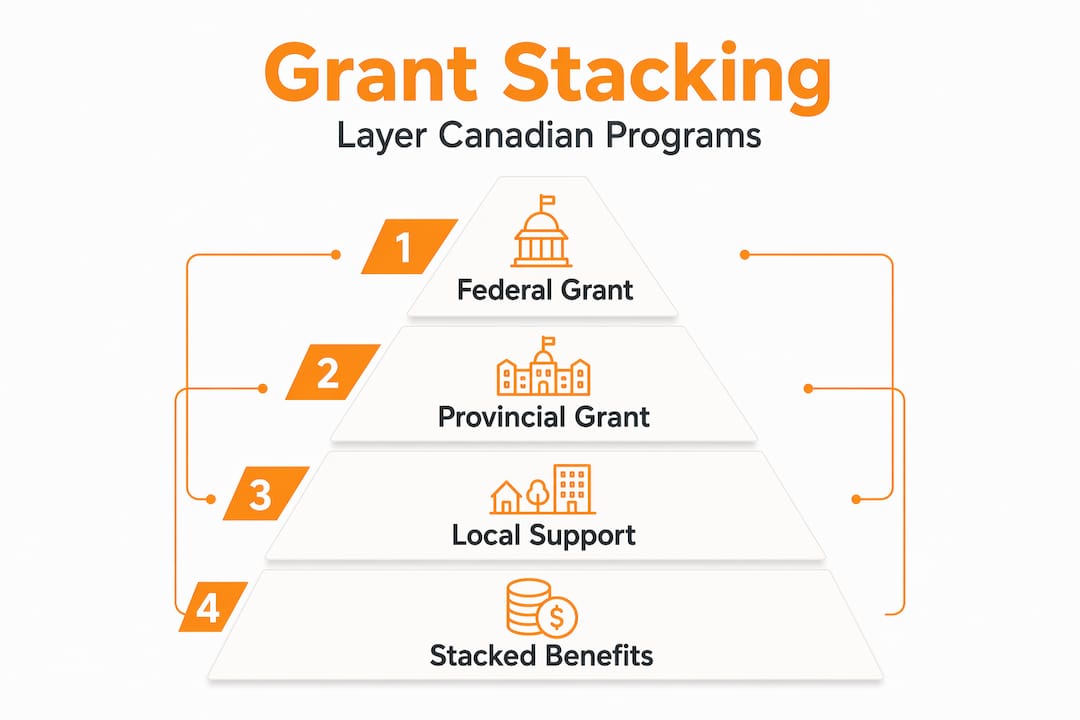
Once you’ve identified the right programs for your region, the next step is making sure you meet the eligibility criteria and submit a clean, complete application. Most rejections aren’t due to ineligible projects. They happen because of missing documents, incomplete farm maps, or vague project descriptions.
Here’s a step-by-step look at how most fencing grant applications work:
- Confirm eligibility first. Check acreage minimums, livestock requirements, and practice type. For example, the Ontario Farm Fence Grant requires rotational grazing on 25 or more acres. If you’re short of that threshold, combining parcels or clarifying your grazing rotation plan may help.
- Create a detailed farm map. Show existing fencing, proposed new boundaries, water access points, and any riparian areas. GPS or aerial maps are ideal. Reviewers need to visualize your project.
- Document your herd. Include livestock type, numbers, and current grazing patterns. If you’re shifting from continuous to rotational grazing, describe the change clearly.
- Build a line-item project budget. Break down costs for materials, labor, technology, and installation. Use current supplier quotes where possible to show cost accuracy.
- Write a clear practice description. Explain what you’re doing, why you’re doing it, and what environmental benefit it produces. Be specific. Vague language like “improve fencing” is not enough.
- Submit before deadlines. Check program-specific windows. Some programs run intake sessions; others have rolling applications. Missing a window by even one day can delay your project by a full season.
Understanding Canadian fencing laws and regulations is also part of eligibility. Certain programs require that your project meets provincial fencing standards, and reviewers may check compliance before approving cost-share.
Here’s a quick reference for key eligibility criteria by province:
| Province | Program | Min. Acreage | Key Eligibility Note |
|---|---|---|---|
| Alberta | RDAR OFCAF | Varies by project | Virtual fencing accepted |
| BC | IAF BMP | Check current guide | Riparian buffer required for riparian stream |
| Ontario | Farm Fence Grant | 25 acres | Rotational grazing must be demonstrated |
| National | OFCAF | Project-dependent | Environmental outcomes required |
Pro Tip: Before you apply, call the program administrator directly. Most provincial program staff are genuinely helpful and will tell you exactly what they need to see in an application. Spending 30 minutes on a call can save you hours of revisions later. Also, review rotational grazing fencing benefits to strengthen the environmental case in your narrative.
How virtual fencing changes the grant landscape
Virtual fencing isn’t just a novelty technology anymore. It’s a fully funded, increasingly mainstream practice that several Canadian grant programs now recognize as a stand-alone eligible expense. For operations that have been hesitant to invest because of upfront hardware costs, grant funding changes the math significantly.
The core advantage of virtual fencing is flexibility. Physical fencing locks you into permanent pasture divisions. Virtual systems let you move boundaries from an app, rotate your herd daily if needed, and adapt to drought conditions, seasonal forage changes, or conservation requirements without touching a post or wire. That adaptability is exactly what modern grazing management demands.
Virtual fencing enables precise livestock management without physical infrastructure, reducing labor and improving soil health and biodiversity. Grant programs in Alberta and BC have recognized these outcomes explicitly, which is why both RDAR OFCAF and BC BMP now fund it.
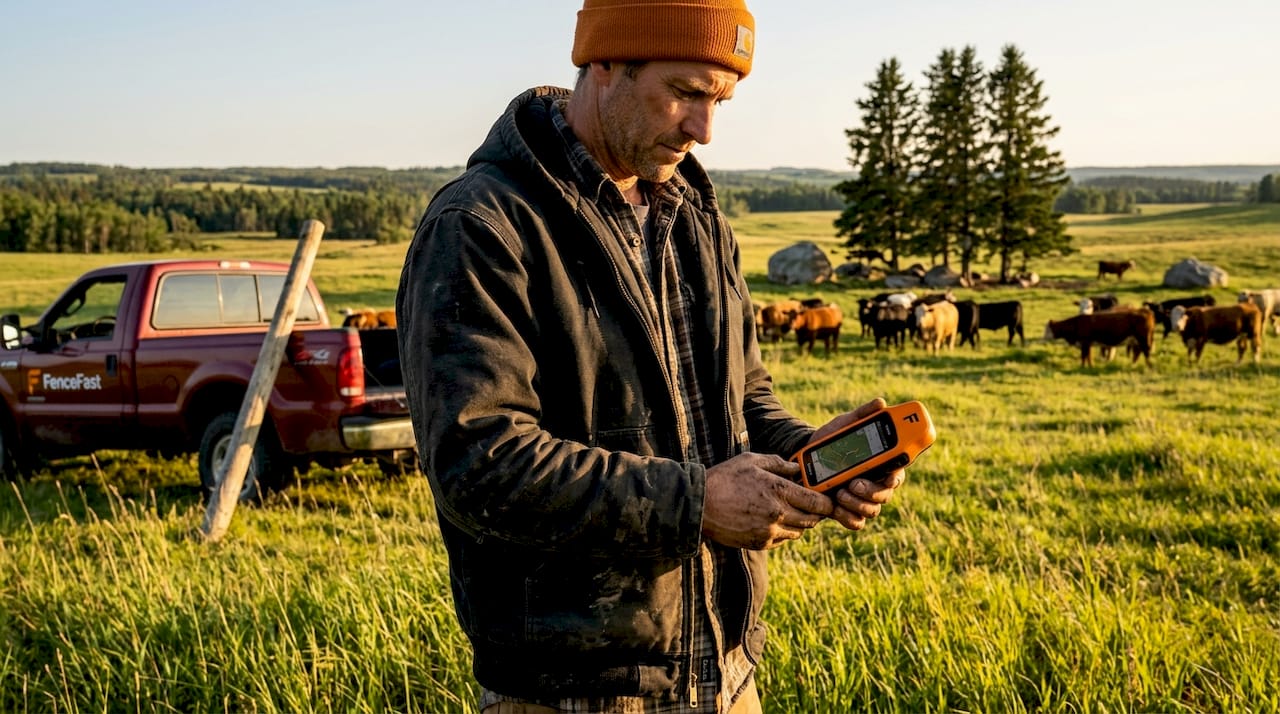
The financial case is strong even before grants enter the picture. Installing traditional cross-fencing across large acreages can cost $8,000 to $20,000 or more per kilometer depending on terrain and materials. A virtual fencing deployment covering the same area often costs less upfront and requires minimal ongoing infrastructure maintenance. With an 85% cost-share available in Alberta, the net producer cost for a full virtual fencing system can be remarkably low.
Why virtual fencing scores well in grant evaluations:
- Demonstrates innovation and adoption of newer agricultural practices
- Shows measurable environmental benefit through adaptive grazing management
- Reduces soil disturbance compared to post installation
- Aligns with biodiversity and waterway protection program objectives
- Scalable documentation through app-based reporting tools
For ranchers in BC, pairing virtual fencing with a riparian buffer plan is especially powerful. Programs that fund both practices together can be stacked, and virtual fencing on BC ranches has shown measurable cost and labor savings that reviewers respond to positively.
Pro Tip: When applying for virtual fencing funding, frame your project as a pilot with measurable outcomes. Specify the acres you’ll manage, the number of animals involved, and how you’ll document grazing behavior changes before and after deployment. Grant evaluators favor projects that produce data, and virtual fencing systems generate that data automatically through their tracking apps.
Why most farmers underutilize fencing grants—and how to move ahead
Here’s an uncomfortable truth worth saying plainly: the biggest barrier to getting fencing grant money is not eligibility. It’s inertia. Most producers who miss out on these programs are already running qualifying operations. They just haven’t applied.
Part of that is understandable. Farmers are busy. Grant applications feel like bureaucratic paperwork designed for someone with a full-time office job. But the programs described in this guide are not as complex as they seem once you’ve done the initial research. Many applications take less than a day to prepare if you already have your farm maps and budget in order.
The bigger missed opportunity is stacking. Producers who apply for a single program when two or three programs could fund the same project leave tens of thousands of dollars on the table. BC is the clearest example. Running BMP and OFCAF together on a qualifying riparian and rotational grazing project can push cost-share to 85%. That’s a transformational difference on a $60,000 fencing project.
Another common miss is virtual fencing. We speak with ranchers regularly who assume virtual fencing is either too expensive or too experimental to qualify for government support. Neither is true anymore. The technology is proven, programs fund it explicitly, and the ROI once grants are factored in is among the best in modern farm infrastructure investment.
The practical advice here is simple. Set a calendar reminder at the start of each fiscal year to review your provincial fencing program intake dates. Keep a basic project file with your farm map, current livestock numbers, and a rough budget estimate ready to update. When a window opens, you’re not starting from scratch. If you’re still building the case for your operation, a temporary cow fence guide can help you pilot rotational concepts before committing to a full funded project.
Long-term, early adopters of both technology and grant programs are the ones who build the most resilient operations. The ranchers investing in choosing durable fencing solutions with grant support today are reducing their infrastructure costs for the next 20 years.
Ready to make your fencing project grant-ready?
Government programs are funding the future of Canadian fencing, but you need the right products and the right partner to make those projects come together cleanly. FenceFast has spent 26 years helping producers across Canada source everything from basic barbed wire to full Gallagher eShepherd virtual fencing systems, and we understand exactly what grant-funded projects need in terms of specification and documentation.
Whether you’re planning a traditional rotational grazing build or deploying GPS-enabled virtual fencing for the first time, FenceFast fencing solutions includes the products, the expertise, and the support to keep your project on track and grant-compliant. Our team can help you match the right equipment to your program requirements. For a deeper look at how fencing strategies work hand-in-hand with grant programs, browse our rotational grazing solutions resource to see real-world setups that have secured provincial funding.
Frequently asked questions
What types of fencing projects qualify for grants?
Most programs support traditional and virtual fencing, especially for rotational grazing and environmental protection. RDAR OFCAF and IAF BMP/OFCAF specifically cover rotational, riparian, and virtual fencing setups.
Can I combine multiple grant programs for my fencing project?
Yes, stacking is allowed in several provinces. BC’s BMP program is stackable with OFCAF for a combined cost-share of up to 85%, which can dramatically reduce your out-of-pocket investment.
Is virtual fencing eligible for government funding in Canada?
Yes, both Alberta and BC explicitly fund virtual fencing. Virtual fencing is covered under RDAR OFCAF and BC BMP as part of rotational grazing and pasture management practices.
What do I need to include in my fencing grant application?
Typical requirements include farm maps, herd details, a line-item budget, and documentation of your practice, such as acreage and livestock type. The Ontario Farm Fence Grant also requires proof of rotational grazing on 25 or more acres.
When are grant application deadlines for fencing programs?
Deadlines vary significantly by program and province. The BC Beneficial Management Practices Program is ongoing in 2026, but always confirm current intake windows directly with the program administrator before you start your application.
Recommended
- Grants for Farm Fencing: Boosting Livestock Protection – FenceFast Ltd.
- Fence installation steps for Canadian farms: A practical guide – FenceFast Ltd.
- Canada fencing requirements: Stay compliant and protect livestock – FenceFast Ltd.
- Portable outdoor fencing guide for Canadian farmers 2026 – FenceFast Ltd.

